
Why Tetouan matters
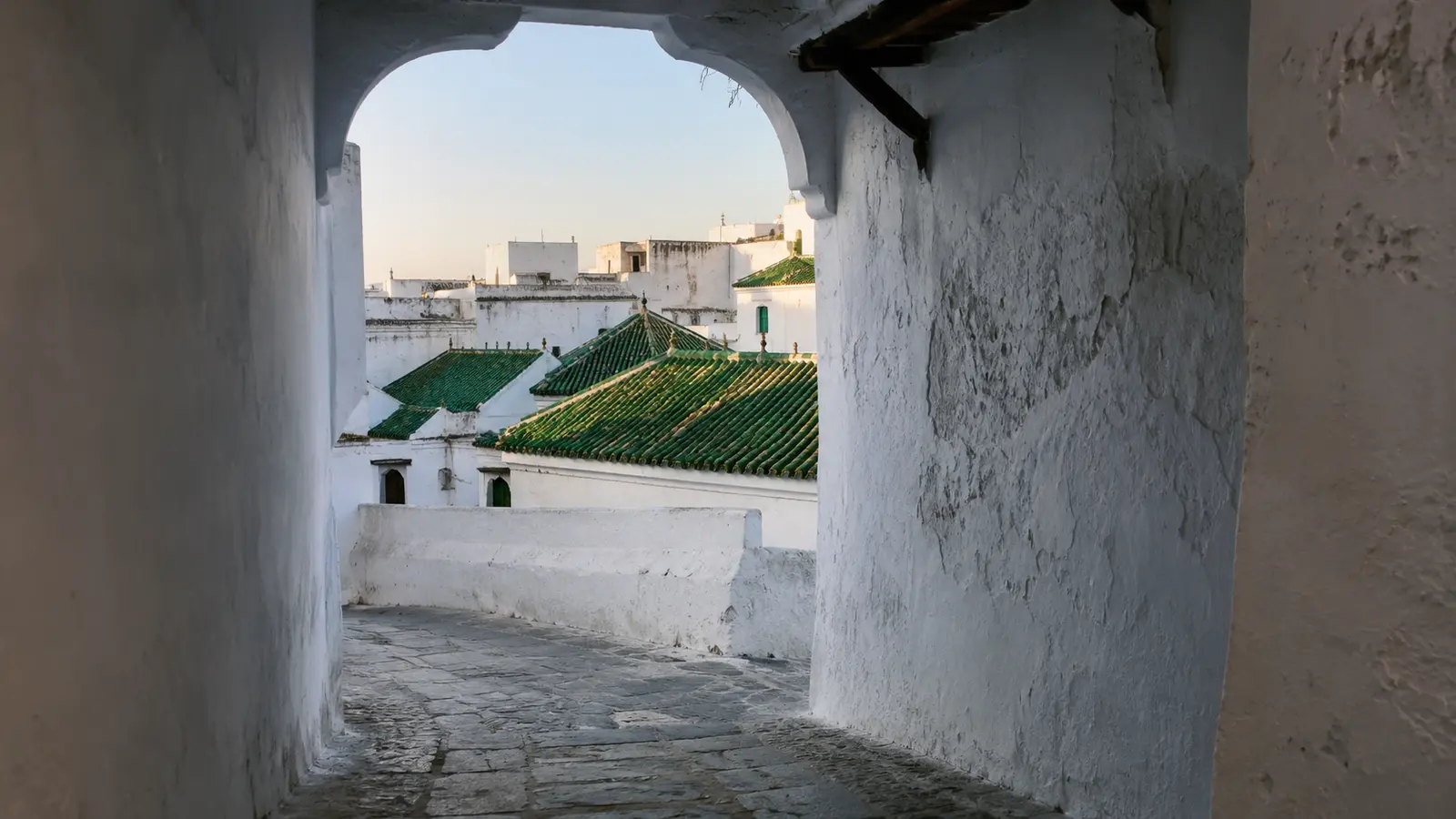
After the late medieval period, communities arriving from al-Andalus helped shape Tetouan’s urban form, crafts and cultural identity. UNESCO highlights the medina’s Andalusian influence and the completeness of its historic fabric. This does not make it a museum of Spain in Morocco; it is a Moroccan city whose architecture, food and language reflect long movement across the Strait and the western Mediterranean.
The medina’s value lies partly in continuity: streets, houses, craft areas and religious buildings retain relationships that survived repeated modernization elsewhere. Walking with that in mind shifts attention from individual monuments to the way gates regulate access, markets group trades and courtyards mediate private life. UNESCO’s record supplies the historical frame without replacing what can be observed on the ground.
- Use UNESCO context without flattening identity
- Observe courtyard, gate and lane relationships
- Remember the medina remains residential and commercial
Check current details: Official Tetouan destination overview · UNESCO — Medina of Tetouan
Orientation from the new city to the gates
Place Moulay El Mehdi is a useful modern-city reference before approaching the medina. Identify your entry gate and a return point on an offline map. Near the Royal Palace square, follow posted restrictions and do not photograph security positions. Inside, use market functions, slope and gates to stay oriented rather than trusting a single straight-line route through streets that change character by time of day.
Ask your accommodation or guide which gate best matches the day’s interests rather than always using the most photographed entrance. A different gate can shorten the approach to a craft quarter or lunch stop. Before entering, note the gate’s name in French or Arabic and choose a recognizable exterior meeting point in case a group separates.
- Save the gate name before entering
- Keep controlled perimeters clear
- Plan one-way movement through the medina
- Choose a meeting point outside the tightest lanes
Artisan geography, not a souvenir checklist
Tetouan is associated with embroidery, leather, painted wood, tile and other crafts, but a workshop and a retail display are not the same thing. Ask whether work is made on site, who produced it and what materials are used. Watch only where invited, avoid interrupting skilled labor for a photograph and recognize that a higher price may reflect time, local wages and material rather than tourist markup alone.
Embroidery and painted wood require different skills, time and materials, so compare like with like. A seller who can explain technique, origin and care usually offers more useful information than one repeating only “old” or “Berber.” If shipping a fragile item, agree who packs it, what documentation is supplied and what happens if it arrives damaged before making payment.
- Distinguish production from resale
- Ask before handling or photographing work
- Request dimensions and material details
- Walk away politely if the exchange feels pressured
Museums and cultural stops
Choose one or two interiors that deepen the day rather than building the route around unverified opening times. An archaeology collection, ethnographic display or contemporary cultural institution can explain northern Morocco beyond the streets, but access may change for prayer, holidays, maintenance or programming. Check an official page or call on the day, and keep the surrounding architecture as a fallback rather than forcing entry.
A museum closure need not derail the day. Use the saved hour to study façades, a public square or an active market street, then continue toward lunch. When an institution is open, check its own photography policy and give the collection enough time; rushing through solely to add its name to an itinerary does not improve understanding.
- Reverify hours on the day
- Carry a non-museum alternative
- Ask about photography rules
- Do not publish a price without a date
What to eat in Tetouan
A northern food plan might include bakery items, jben-style fresh cheese when available, market fruit, seafood nearer the coast and pastries showing Andalusian influence. Choose places by turnover and specialty rather than decorative claims. Ask what is prepared today, confirm how seafood is priced and avoid treating a busy market aisle as seating. A long lunch can also serve as the day’s needed rest.
Tetouani pastries and savory foods often reflect the city’s northern and Andalusian connections, but kitchen practice varies by household and shop. Ask a bakery to identify items before buying a mixed selection, especially when nuts, sesame or dairy matter. A market visit is useful for seeing seasonal produce, provided bags, bodies and camera gear do not obstruct the aisle.
- Choose fresh turnover over a long menu
- Ask the unit used for fish pricing
- Carry small cash without displaying it
- Leave room for a pastry and tea stop
Getting there and choosing road transport
From Tangier, Tetouan is usually a road journey by coach, grand taxi or private transfer; the trade-off is timetable certainty, comfort, departure point and whether you are traveling with luggage. Chefchaouen and Martil also connect by road. Verify the current terminal and fare before departure, and do not assume a vehicle labeled for a city will leave immediately if it fills by shared-seat practice.
Coach travel gives a fixed departure, while grand taxis can reduce waiting once seats are filled but may offer less luggage space and a less predictable start. Private transport is useful for a group or controlled return but should be priced for the whole vehicle and route. Photograph the agreed license plate or dispatch detail for your own records when appropriate.
- Confirm terminal, destination and fare
- Ask whether the seat is shared or private
- Keep a return option with margin
- Use official coach booking where available
Check current details: Official Tetouan destination overview · UNESCO — Medina of Tetouan
A respectful one-day structure
Begin with orientation in the newer city, enter the medina in the morning, devote the central hours to one craft area and one cultural stop, then pause for lunch before returning by a different gate. On Friday, some commercial rhythms slow around prayer; during Ramadan, food and opening patterns shift. Treat those changes as normal civic life, not an inconvenience to be argued away.
Around prayer time, move away from mosque entrances and let worshippers pass. Friday is still a worthwhile day, but the timetable should emphasize exterior heritage, food after local businesses reopen and a less rigid museum plan. During Ramadan, a traveler can eat discreetly where service is offered without assuming daytime restaurant availability will match another season.
- Morning for active market and craft streets
- Midday for one verified interior
- Afternoon for lunch and a measured return
- Adjust around prayer and local holidays