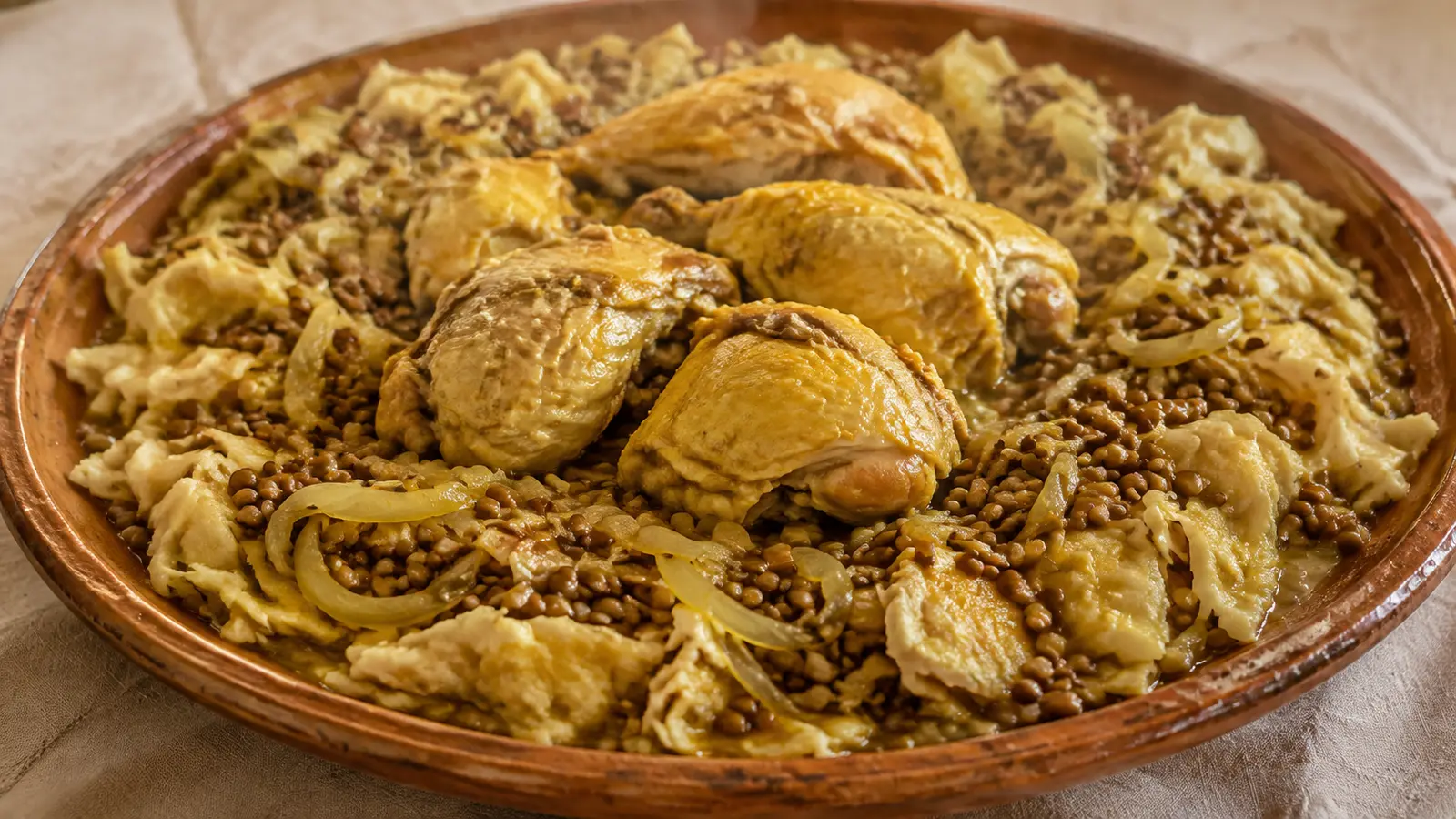
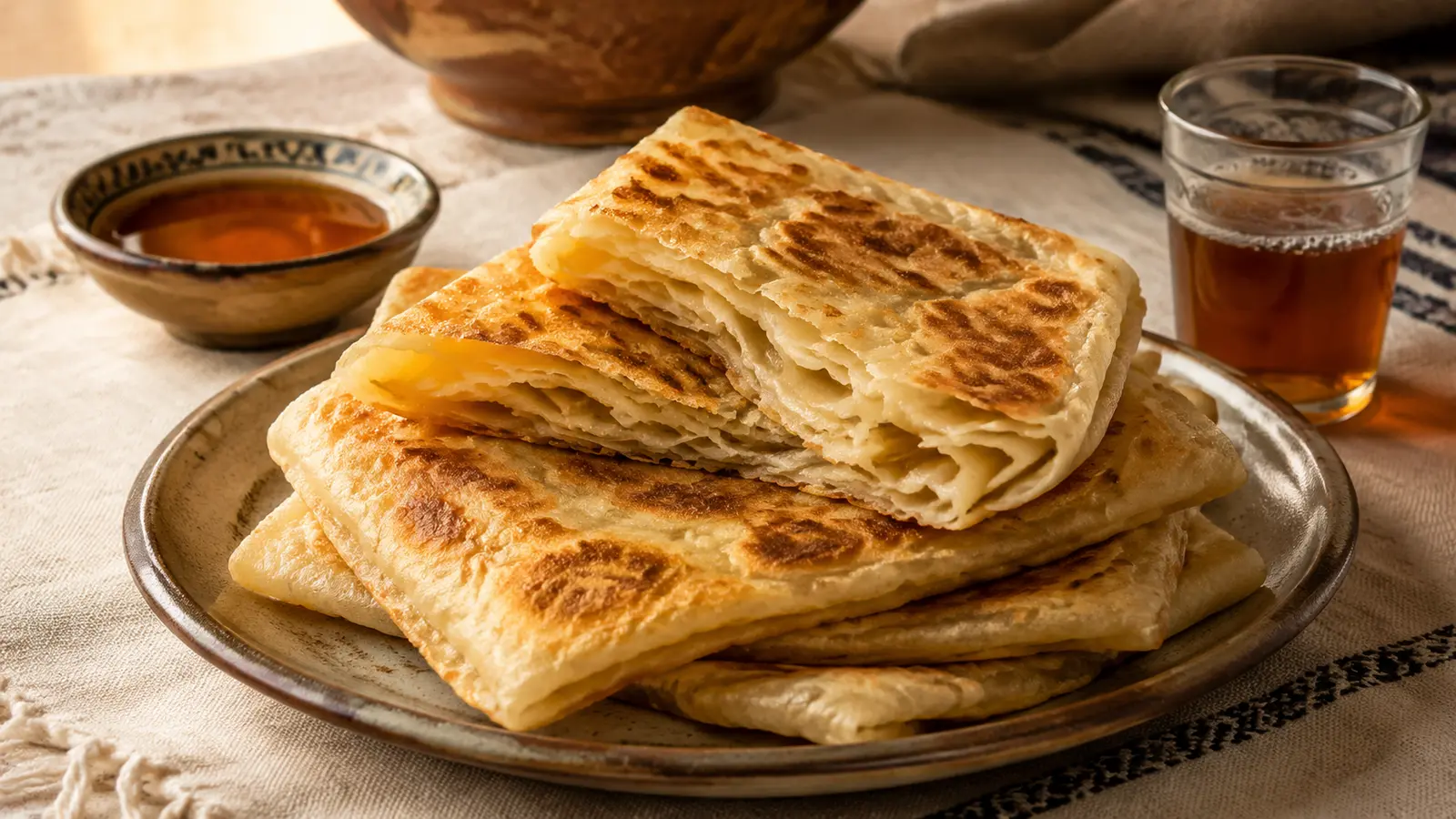
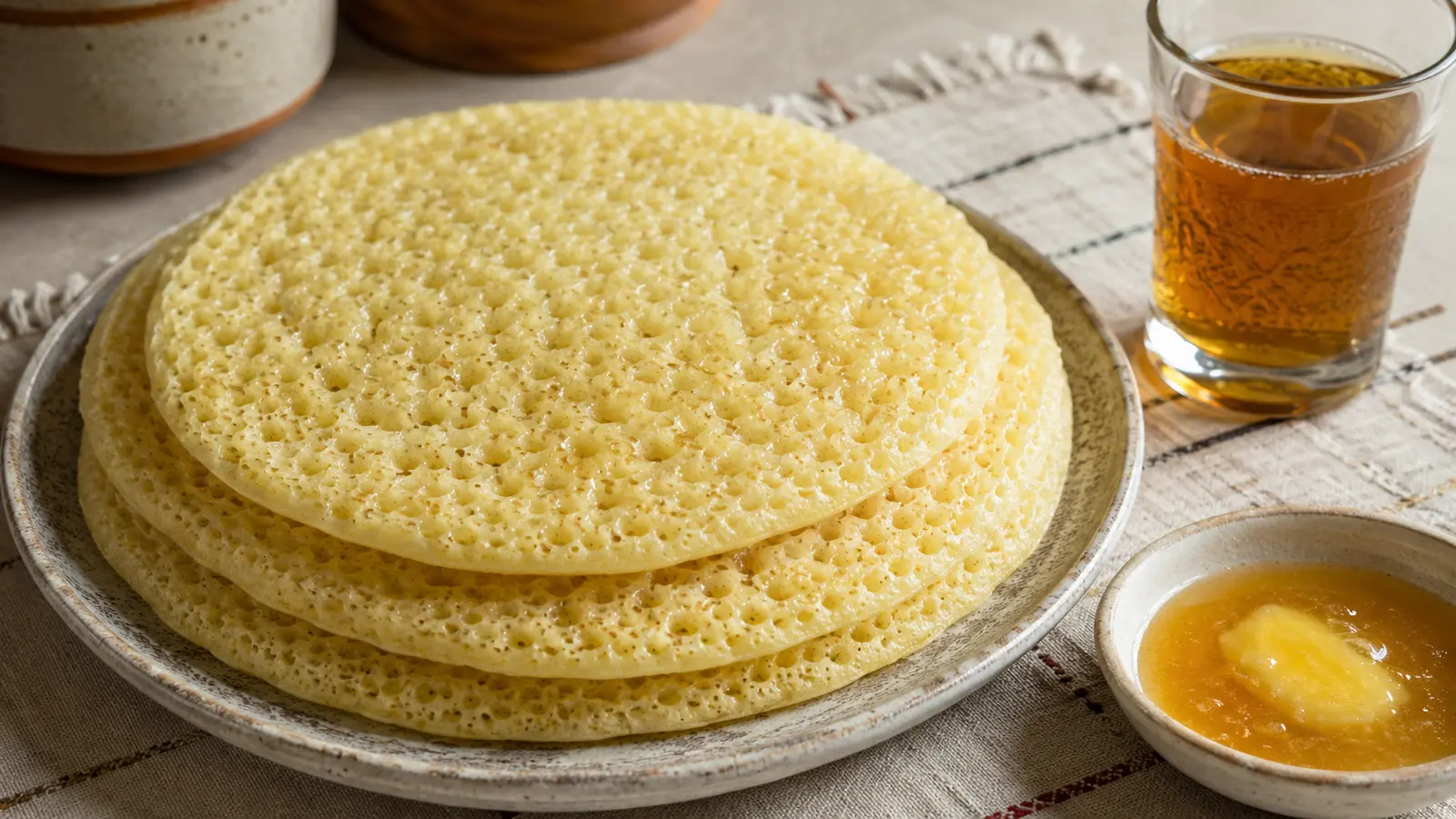
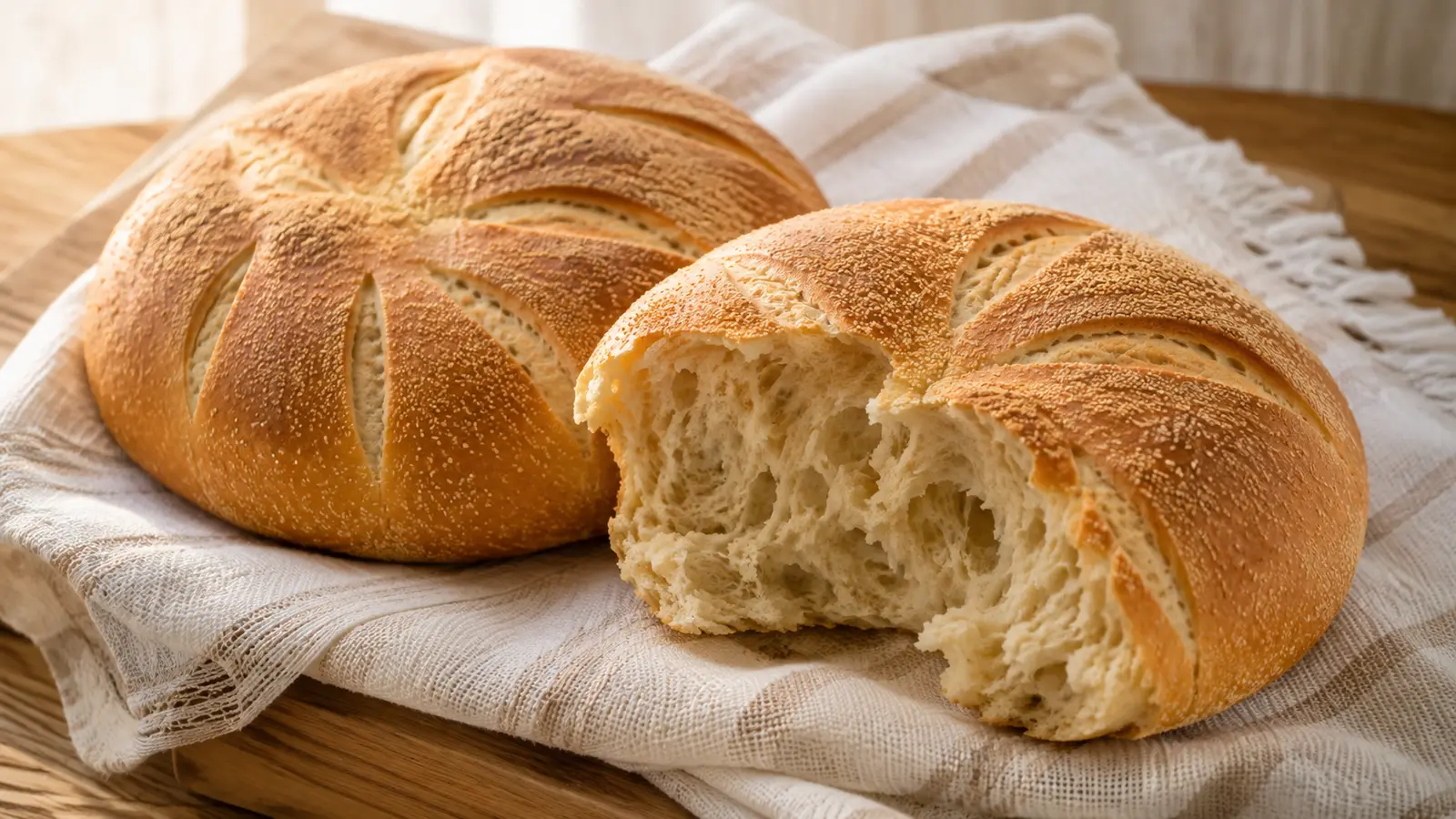
Understand khobz, msemen, baghrir, harcha and the mixing, resting, folding and griddle skills behind Moroccan breads.
Bread is a daily utensil, staple and sign of hospitality across Morocco. The category reaches well beyond one round loaf: wheat and semolina doughs may be baked, layered, pan-cooked, fermented into honeycombed pancakes or shaped into tender griddle rounds.
Use this collection with confidence
Read dough instead of chasing one flour ratio
Flour strength, semolina grind and humidity alter absorption. Add water gradually, allow a short rest, then evaluate elasticity and tackiness before correcting. A dough that feels slightly soft after kneading often bakes more tenderly than one tightened with repeated handfuls of flour.
Match the technique to the bread
Khobz needs even shaping and a complete proof. Msemen depends on a relaxed dough, thin stretching and deliberate folds. Baghrir relies on an active batter and one-sided cooking that preserves its holes. Harcha should remain tender and sandy rather than becoming a dense biscuit.
Serve, store and refresh thoughtfully
Many Moroccan breads are best on the day they are made. Cool them before enclosing to avoid trapped condensation, freeze extras promptly, and rewarm gently. Serve bread as part of the meal—with tagines, soups, olive oil, honey or amlou—rather than treating it only as a side dish.
Official background reading
For broader cultural and product context, consult these current institutional resources: