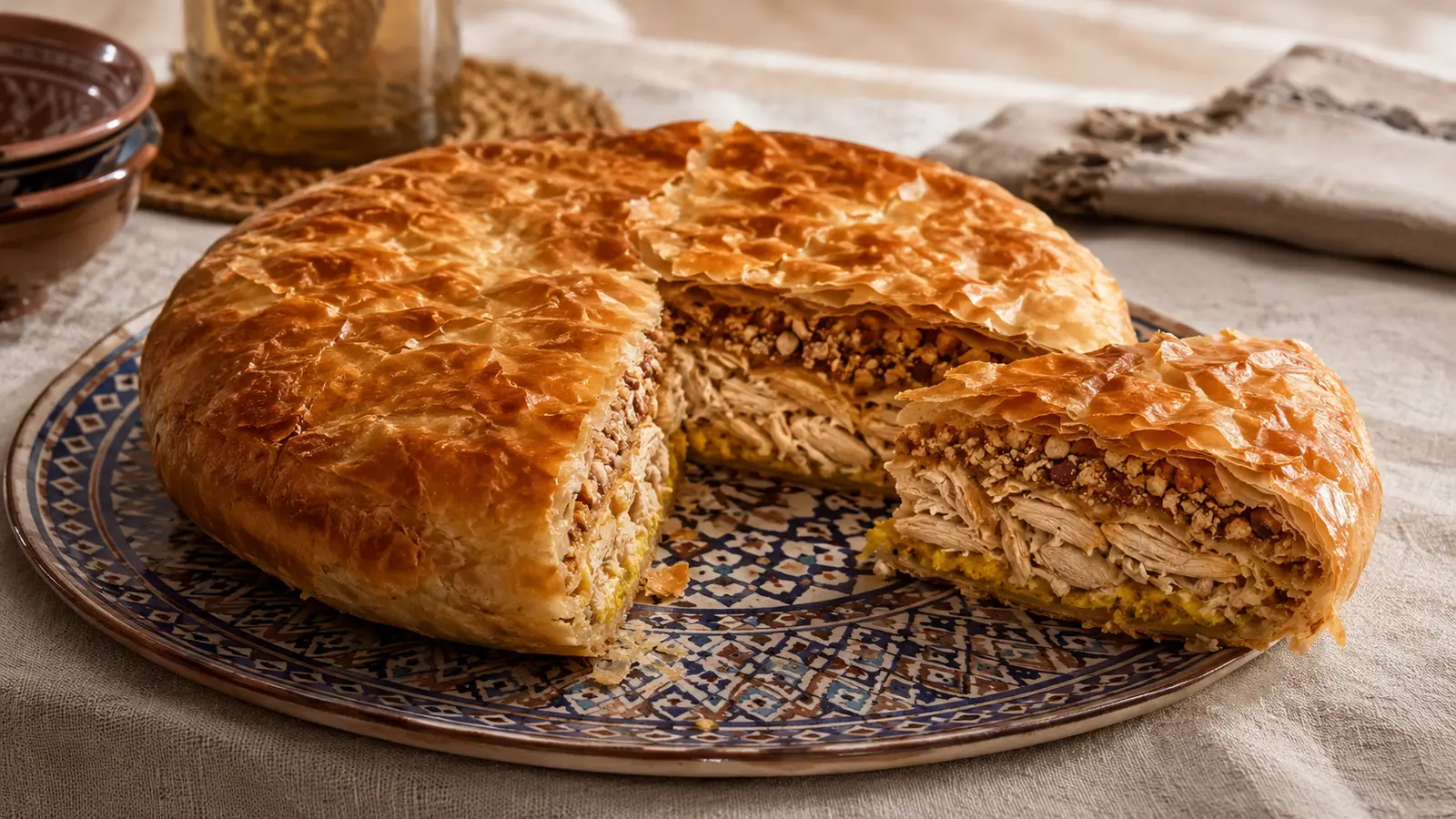
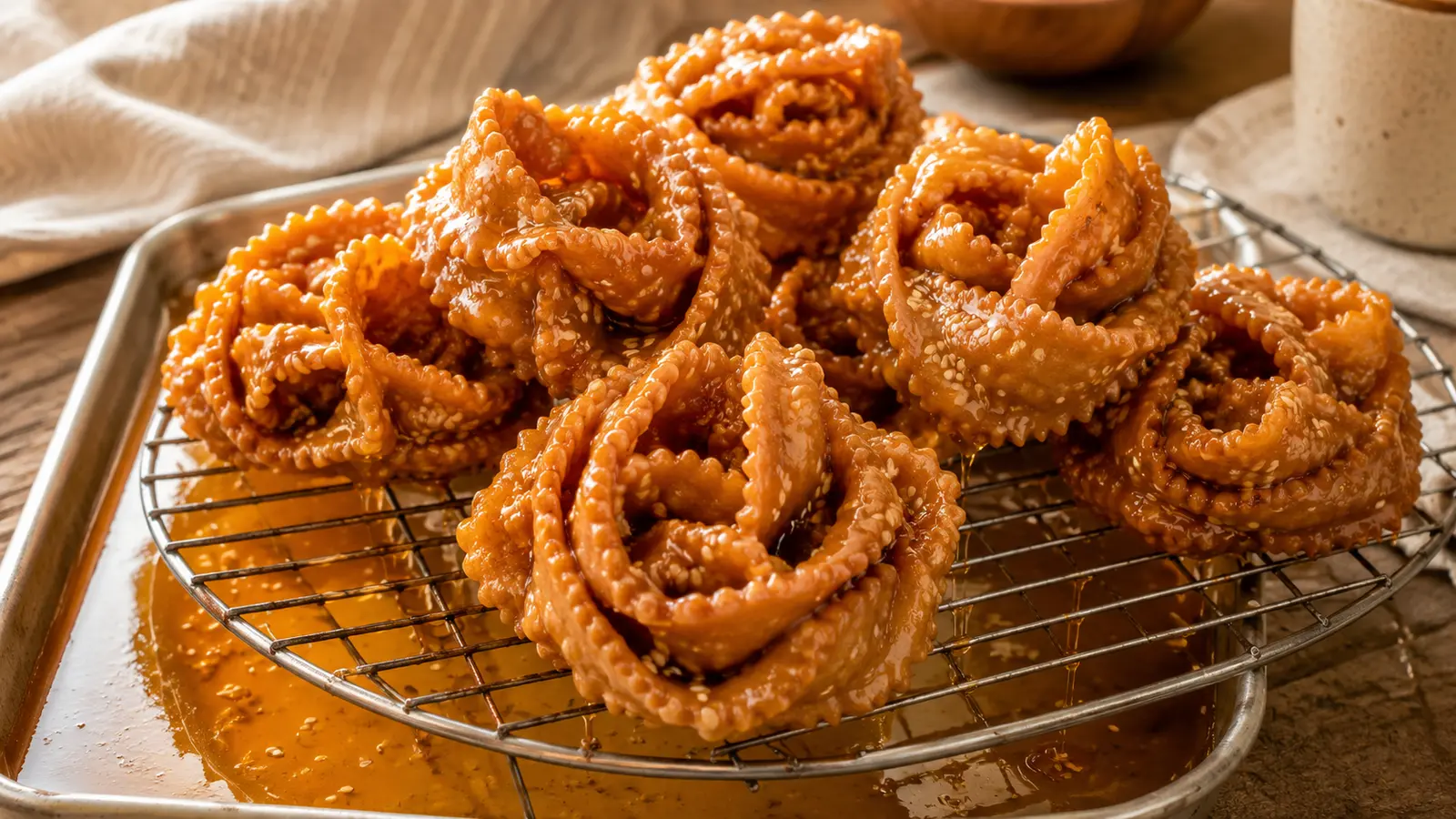
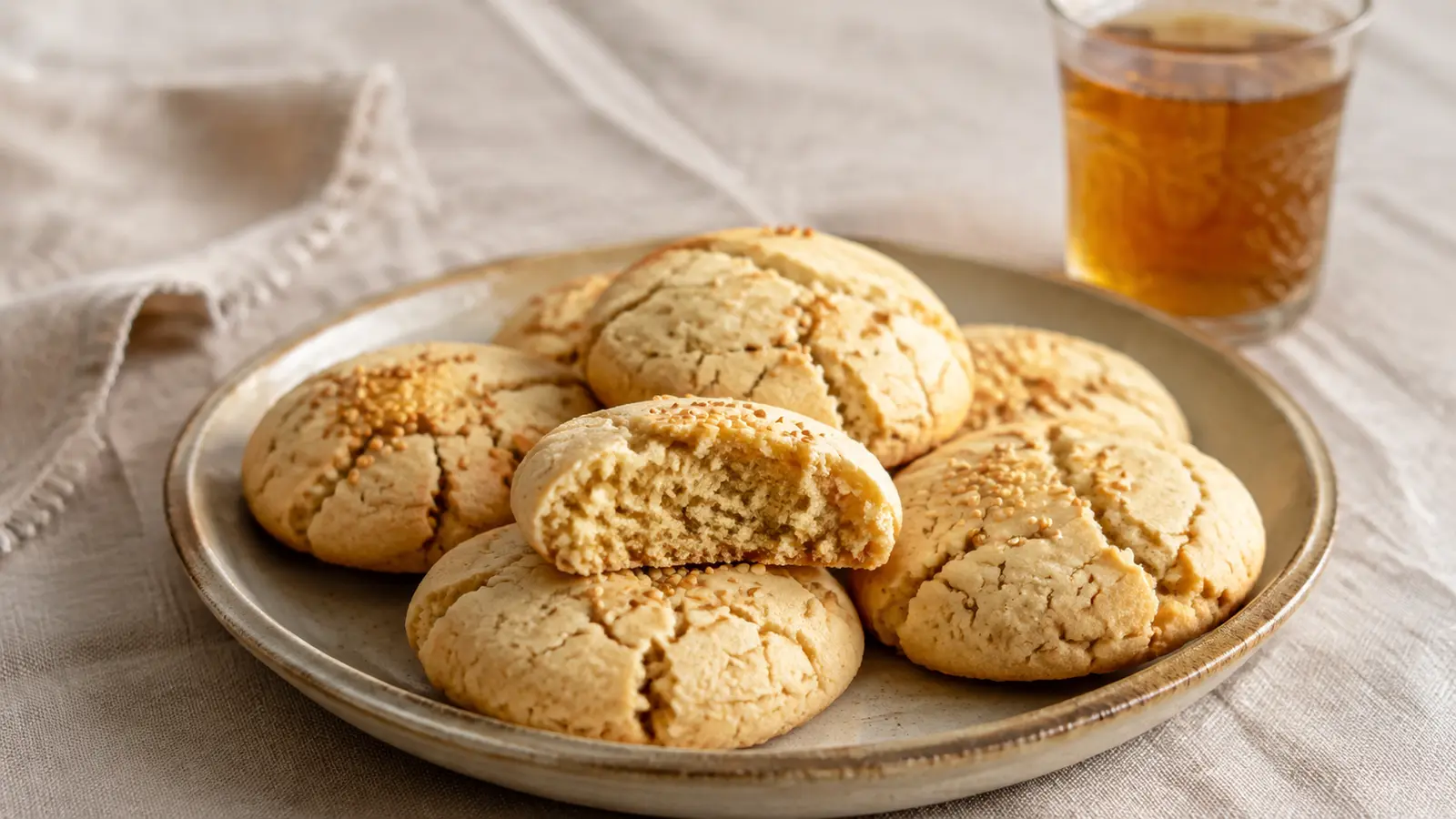
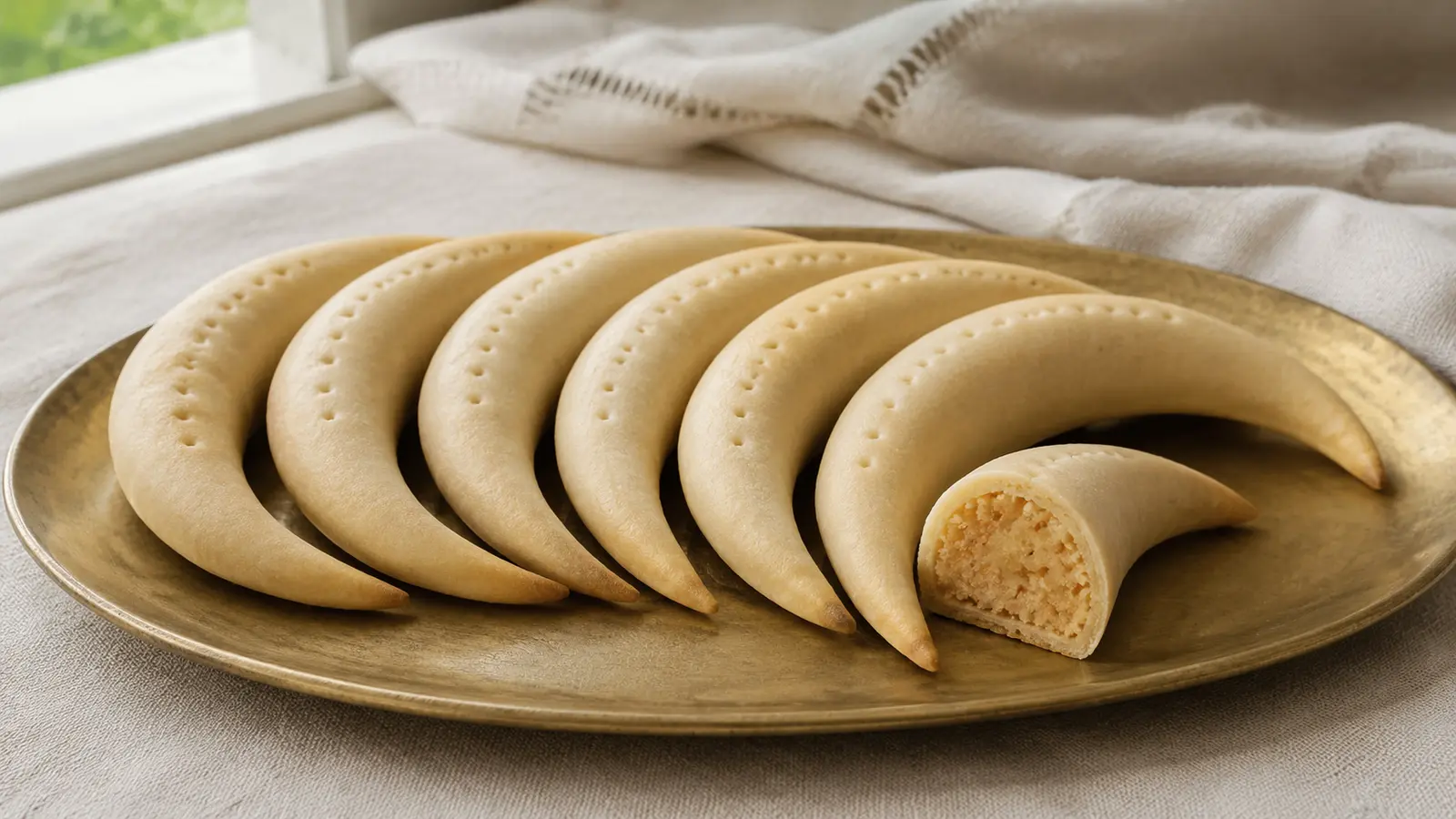
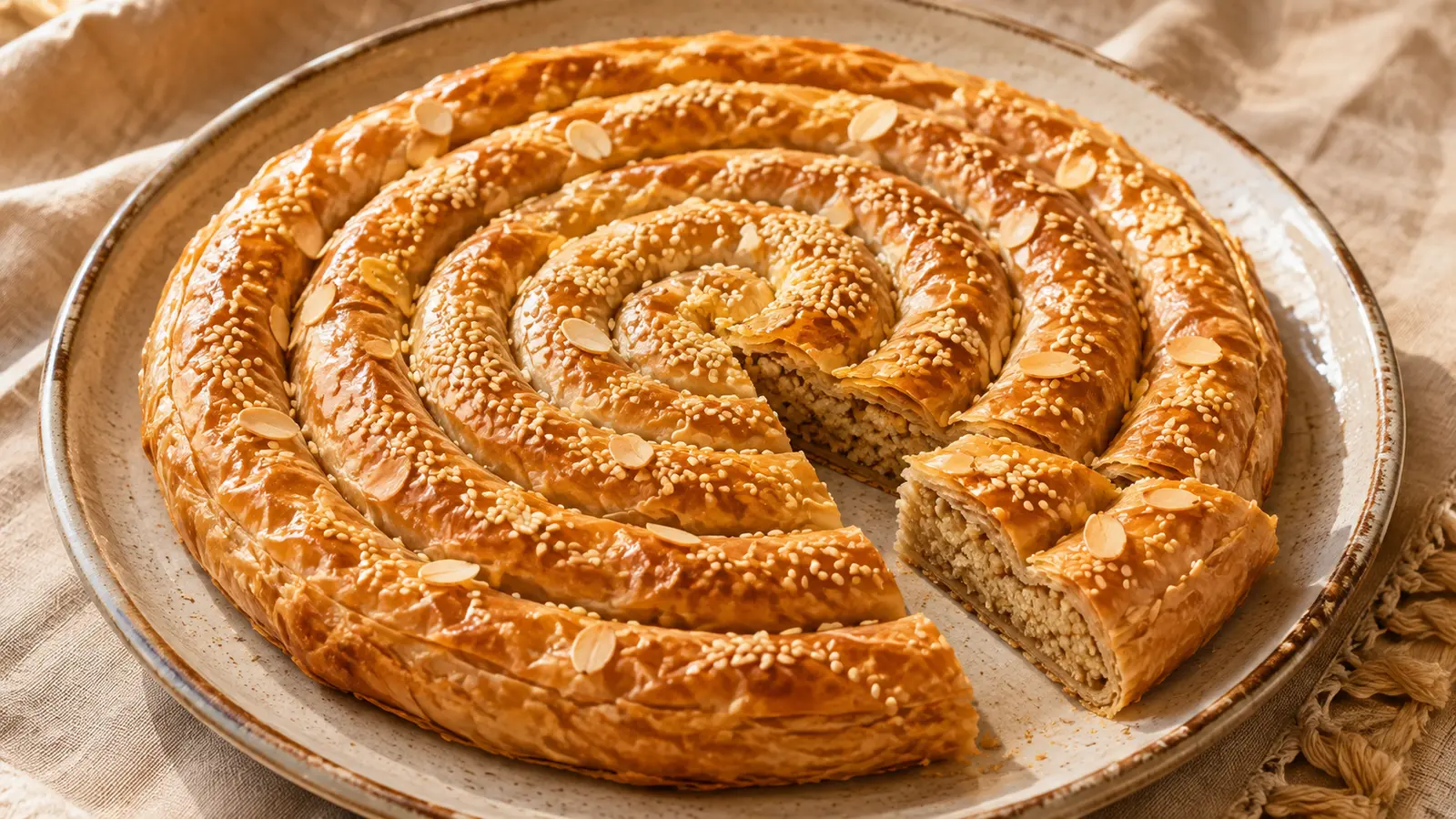
Explore Moroccan cookies and pastries through shaping technique, almond fillings, honey finishes, spice and celebration context.
Moroccan sweets range from everyday tea cookies to pastries associated with Ramadan, weddings and family celebrations. Almonds, sesame, honey, orange-blossom water, cinnamon and careful shaping create distinction without requiring every dessert to be intensely sweet.
Use this collection with confidence
Texture begins before baking
Grinding, mixing and resting determine whether a cookie cracks attractively, a filled crescent stays tender, or a coiled pastry slices cleanly. Weigh ingredients when possible, avoid overworking almond fillings, and use the visual checkpoints in each recipe before committing an entire batch.
Use fragrance with restraint
Orange-blossom water, cinnamon, anise and toasted sesame should support the primary flavor rather than conceal it. Brands vary in intensity, so add aromatic waters incrementally. Freshly toasted nuts and seeds usually contribute more than simply increasing perfume or sugar.
Plan service and allergens
Many classics contain almonds, sesame, wheat, eggs or dairy. Keep cross-contact in mind and label assortments for guests. Honeyed pastries need time to drain, while powdered cookies should cool before finishing. Pair small portions with unsweetened or moderately sweet tea for balance.
Official background reading
For broader cultural and product context, consult these current institutional resources: