
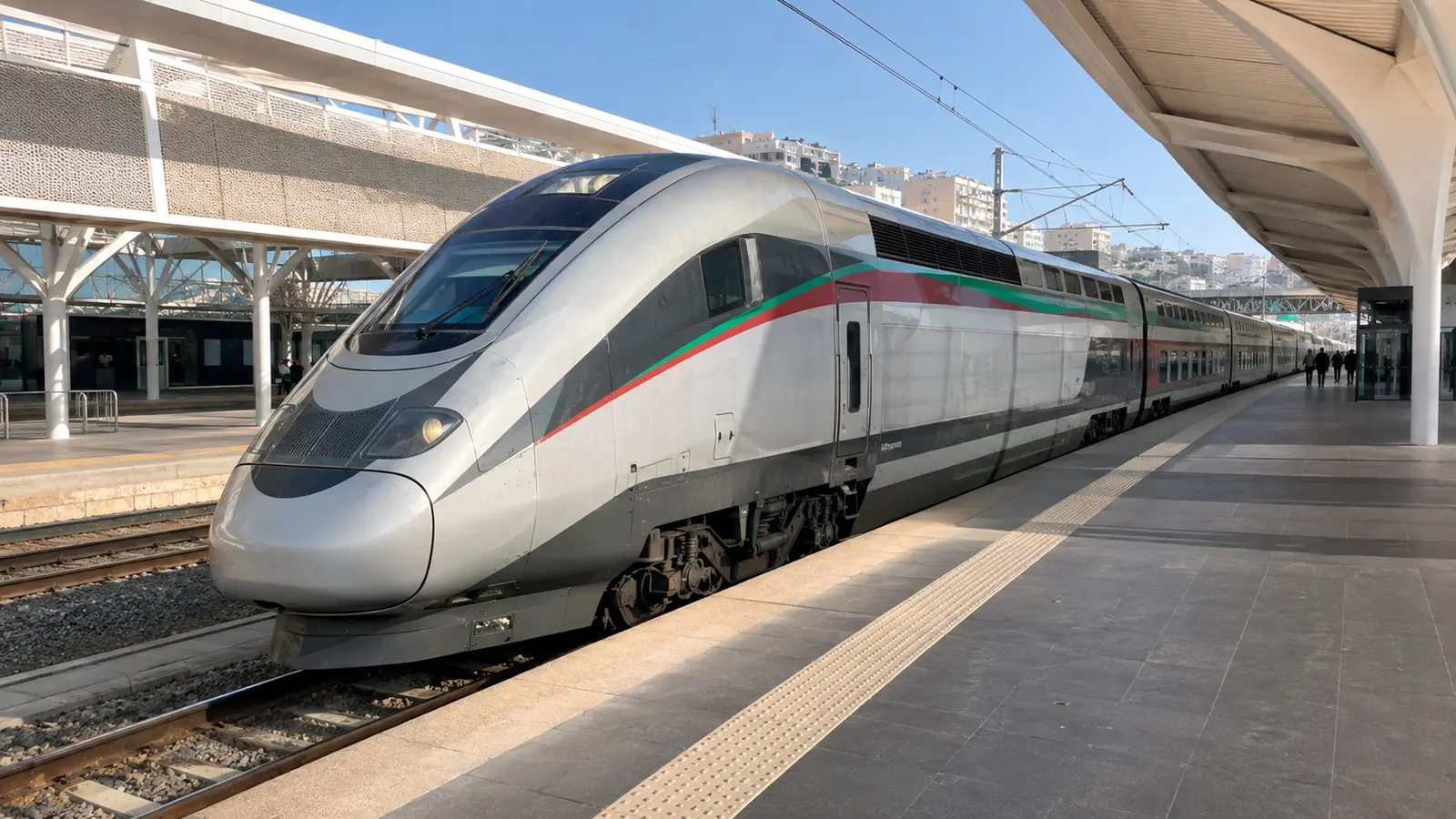
Know what the rail network serves well
The strongest visitor corridor links Tangier, Kenitra, Rabat and Casablanca. Conventional trains connect this backbone with Fes and Marrakech, and the airport station at Casablanca Mohammed V links into the wider network through services and connections shown by ONCF. City pairs and service patterns can change, so construct the route in the official journey planner rather than from a static map alone.
Rail does not directly serve Chefchaouen, Tetouan, Essaouira, Agadir, Ouarzazate, the Todra and Dades valleys or the Merzouga dunes. For those places, pair the nearest practical station with CTM, another established coach, a grand taxi or a prearranged transfer. Compare the full door-to-door time before deciding that the nearest railhead is automatically best.
- Excellent rail corridor: Tangier, Kenitra, Rabat and Casablanca
- Useful conventional connections: Fes, Meknes and Marrakech
- Plan onward road transport for Chefchaouen, Essaouira, Atlas and desert routes
Check current details: ONCF official journey planner
Distinguish Al Boraq from conventional trains
Al Boraq is the high-speed service on the north–Atlantic corridor. It is the natural choice for many Tangier, Kenitra, Rabat and Casablanca journeys when the timetable fits. Al Atlas and regional TNR services cover other routes and stopping patterns; the train name matters because journey time, stop pattern and ticket conditions can differ.
Do not publish or plan around one universal Tangier–Casablanca time or fare. ONCF sells different products, classes and conditions, and temporary offers can appear. Search the exact origin, destination and date, then read whether the selected fare permits changes or refunds. A promotional price seen today is not a permanent baseline.
- Confirm the service name and stop pattern before payment.
- Compare fare conditions, not only the lowest displayed amount.
- Use a fresh search for every travel date.
Check current details: ONCF official schedules and fares
Book through official ONCF channels
Use the ONCF Voyages website or official mobile app. Enter station names carefully, choose the date and class, read the exchange conditions and save the ticket where it works without data. ONCF's app supports ticket purchase and in-app access, but a downloaded copy and the booking reference provide sensible redundancy.
If an international card fails, do not buy from an unknown intermediary. Try the official app, ask your card issuer whether the transaction was blocked, or purchase at an ONCF station when availability permits. For a high-demand departure, leave time to solve payment before the day of travel rather than assuming a ticket will remain available.
- Match the passenger name to the identification used for travel.
- Download the ticket and record the booking reference.
- Check change and cancellation rules before final payment.
Check current details: ONCF Voyages booking · ONCF Voyages app information
Choose first or second class for the journey you have
First class generally offers a quieter, less dense seating environment, while second class is the practical default for many travelers. The exact carriage layout depends on the service and rolling stock. On services with assigned seats, the carriage and seat printed on the ticket matter; do not treat an occupied empty seat as permanently available.
Paying more can be worthwhile for a long journey, a work block, extra personal space or travel at a crowded time. It is not necessary for every trip. Select by duration and need, then confirm what the booking screen says about seat choice because the product can differ across Al Boraq, Al Atlas and regional trains.
- Keep the ticket ready during the journey.
- Board the correct carriage when a seat is assigned.
- If accessibility or assistance is important, contact ONCF before travel.
Check current details: ONCF official booking portal
Plan luggage, boarding and connection buffers
Travel with luggage you can lift onto the train and move through stairs, platforms and station entrances. Keep passports, medication, electronics and money in a small bag that stays with you. Larger pieces may sit in end-of-carriage racks or another designated space, so use a simple identifier and keep valuables out of unattended outer pockets.
Arrive early enough to find the platform without rushing. Station displays and announcements are more reliable than an old screenshot. For a rail-to-coach, airport or ferry connection, include time to leave the platform, locate the next terminal and absorb a reasonable delay—especially when separate companies do not protect the onward ticket.
- Use manageable luggage rather than assuming porter service.
- Keep essential items and documents on your person.
- Recheck the live departure board at the station.
Check current details: ONCF official schedules
Recognize the station names that cause confusion
Tangier Ville is the principal city rail station and is not the ferry terminal. Rabat Ville is central, while Rabat Agdal is another major stop; choose based on the train and final address. In Casablanca, Casa Voyageurs is the main long-distance interchange, while Casa Port serves a different central location. The airport appears as Aéroport Mohammed V in the journey planner.
Fes and Marrakech each function as major end points for visitor routes, but the station is outside the old medina. Arrange the last mile by official taxi or a verified transfer and show the exact accommodation entrance. A lodging name without a map pin can be ambiguous, particularly when the property is inside a pedestrian medina lane.
- Tangier Ville: city railway station
- Rabat Ville and Rabat Agdal: separate stops
- Casa Voyageurs and Casa Port: not interchangeable
- Fes and Marrakech stations: plan the onward taxi or transfer
Check current details: Search official ONCF station pairs
Combine rail with coaches and taxis intelligently
For Chefchaouen, common strategies combine rail to Tangier or another practical hub with a coach or road transfer. For Essaouira, travelers often continue by coach from Marrakech. Desert itineraries may use Marrakech or Fes as a rail base before a much longer road segment. The best combination depends on current schedules and the number of changes, not simply geographic proximity.
Search the entire chain before buying the first leg. If the final coach departs from a different terminal, map the transfer and build a buffer. On the travel day, check ONCF again for operational changes and ask staff when a platform or connection is unclear. A calm extra hour is usually cheaper than an unprotected missed overnight connection.
- Buy each leg from the responsible operator.
- Map station-to-coach-terminal transfers in advance.
- Leave larger buffers before the final departure of the day.
Check current details: ONCF official rail booking · CTM official coach booking