
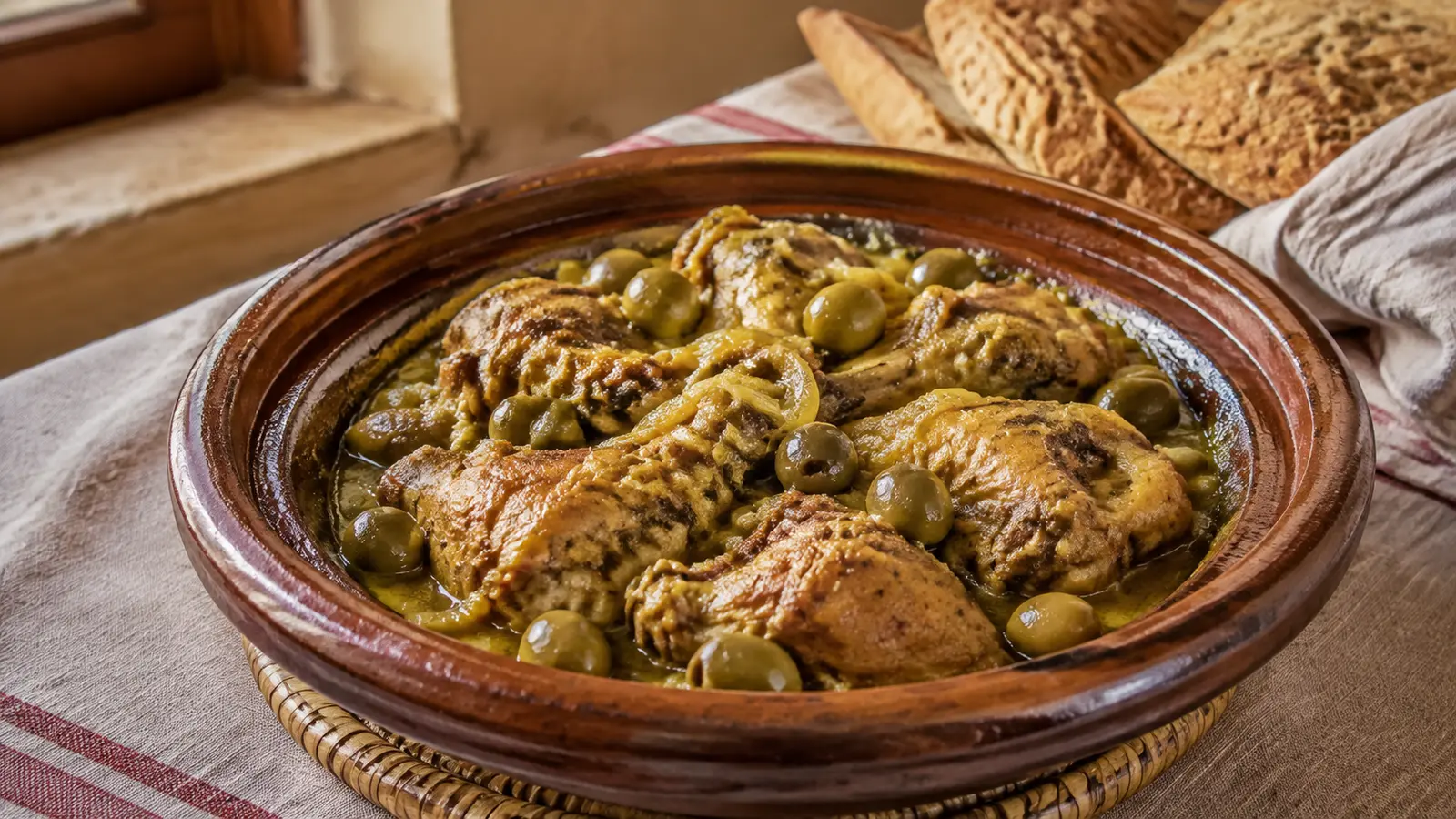
What defines this tagine: onion base, saffron/ginger profile, preserved lemon and olive balance.
The foundation is finely grated or chopped onion cooked beneath the chicken until it loses its raw bite and becomes a spoon-coating sauce. Ginger, turmeric and saffron provide warmth and color; parsley and cilantro supply freshness. Garlic should be present but not so strong that it hides the preserved lemon.
Olives and lemon enter late because both bring salt and aroma rather than long-cooked body. Use mostly the softened rind of preserved lemon. A little pulp can sharpen the sauce, but too much makes it muddy and aggressively salty.
- Target finish: tender chicken, glossy onion sauce and enough liquid to swipe with bread.
- Add olives and lemon only after the chicken is nearly cooked.
- Flavor check before finishing: the sauce should taste primarily of onion, ginger and chicken; preserved lemon and olives should sharpen that base rather than replace it.
Check current details: Moroccan National Tourist Office — food and drink
Ingredient roles and substitutions, with explicit warnings against replacing preserved lemon with raw lemon slices.
Bone-in thighs stay succulent and contribute gelatin; drumsticks also work. Skin may be removed for a cleaner sauce or left on and browned in a Dutch oven. Raw lemon slices do not reproduce preserved lemon: their pith remains bitter, their juice is more acidic and they lack fermented rind aroma.
If preserved lemon is unavailable, make a different lemon chicken rather than labeling the result the same dish. Green or purple Moroccan-style olives are both reasonable; choose unstuffed olives and taste them after rinsing. Unsalted stock is safer than salted stock because the final seasoning comes from several salty ingredients.
- Substitution boundary: fresh lemon zest may brighten a separate adaptation, but raw slices cannot supply the softened cured rind, controlled bitterness or salt of preserved lemon.
Step-by-step mise en place and marinade, photographed before heat is applied.
Mix ginger, turmeric, pepper, saffron water, grated garlic, herbs and oil first. Coat the chicken in a non-reactive bowl, working seasoning around joints and beneath loose skin. Refrigerate while the onions are prepared; do not leave raw chicken marinating on the counter.
Set out the prepared onion, measured water, rinsed olives and finely sliced lemon rind before heat begins. Photographing this stage is useful because it shows the correct amount of liquid and the size of the aromatics without interrupting cooking later.
- Workflow check: keep one cutting board for raw chicken and another for herbs, lemon and bread, then wash hands before touching the clean mise en place.
Clay tagine method: diffuser, heat control, condensation and liquid judgment.
Put a manufacturer-approved clay tagine over a diffuser on low heat. Spread onion across the base, arrange chicken on top and add only 120 milliliters water around the edge. Cover and let the conical lid return condensation; a quiet simmer, not hard bubbling, is the goal.
Check after 35 minutes. If the base is dry before the chicken is tender, add hot water two tablespoons at a time. Never pour cold liquid into hot clay. Rotate the tagine on the diffuser if your burner has a hot spot, and do not lift the lid repeatedly because each opening releases the steam doing the cooking.
- Clay cue: after the first 20 minutes, condensation should bead beneath the lid and return to the base; wisps of steam are normal, an aggressive rattle is not.
Dutch-oven method with adjusted evaporation and timing.
For a Dutch oven, lightly brown the chicken in half the oil, remove it, then soften the onion for eight minutes. Return the chicken, add 240 milliliters water, cover and simmer gently. The broad lid loses less liquid at first but the final sauce needs deliberate uncovered reduction.
Turn the pieces once after 25 minutes so they cook evenly. Begin checking temperature around 45 minutes. If using very large leg quarters, allow more time; the observable cues and thermometer matter more than the clock.
- Dutch-oven cue: browning is optional flavor development, not a safety step; the covered simmer and final internal-temperature check are still required.
Doneness, sauce reduction and salt correction after olives and lemon.
Chicken must reach 74°C/165°F at the thickest part without the probe touching bone. The joint should move freely and the juices should no longer look pink. Transfer cooked pieces temporarily if the sauce is thin, then reduce uncovered until the onion holds a clear trail when a spoon crosses the pan.
Add olives and preserved lemon for the final eight to ten minutes. Taste only after they warm through. Correct excessive salt with unsalted water and a little more onion sauce—not sugar—and correct flatness with a teaspoon of fresh lemon juice only if the cured rind has not provided enough lift.
- Sauce cue: when reduced correctly, onions look almost creamy and liquid does not immediately flood the track left by a spoon.
Serving, leftovers, food safety and links to bread and salads.
Serve from the cooking vessel only if it is stable and protected from a cold table; otherwise transfer to a warm platter. Moroccan khobz is the natural tool for the sauce, while zaalouk or a crisp raw salad can provide contrast. This tagine does not need couscous underneath it.
Refrigerate within two hours in shallow covered containers and use within three to four days. Reheat only the portion needed until steaming hot throughout. Keep raw-chicken utensils separate from herbs, bread and finished garnishes, and discard any raw marinade that has not been thoroughly cooked.
- Serving quantity: allow two small chicken pieces per adult, then use bread and salads to make the meal generous without diluting the tagine itself.
Check current details: Morocco food safety authority — ONSSA