
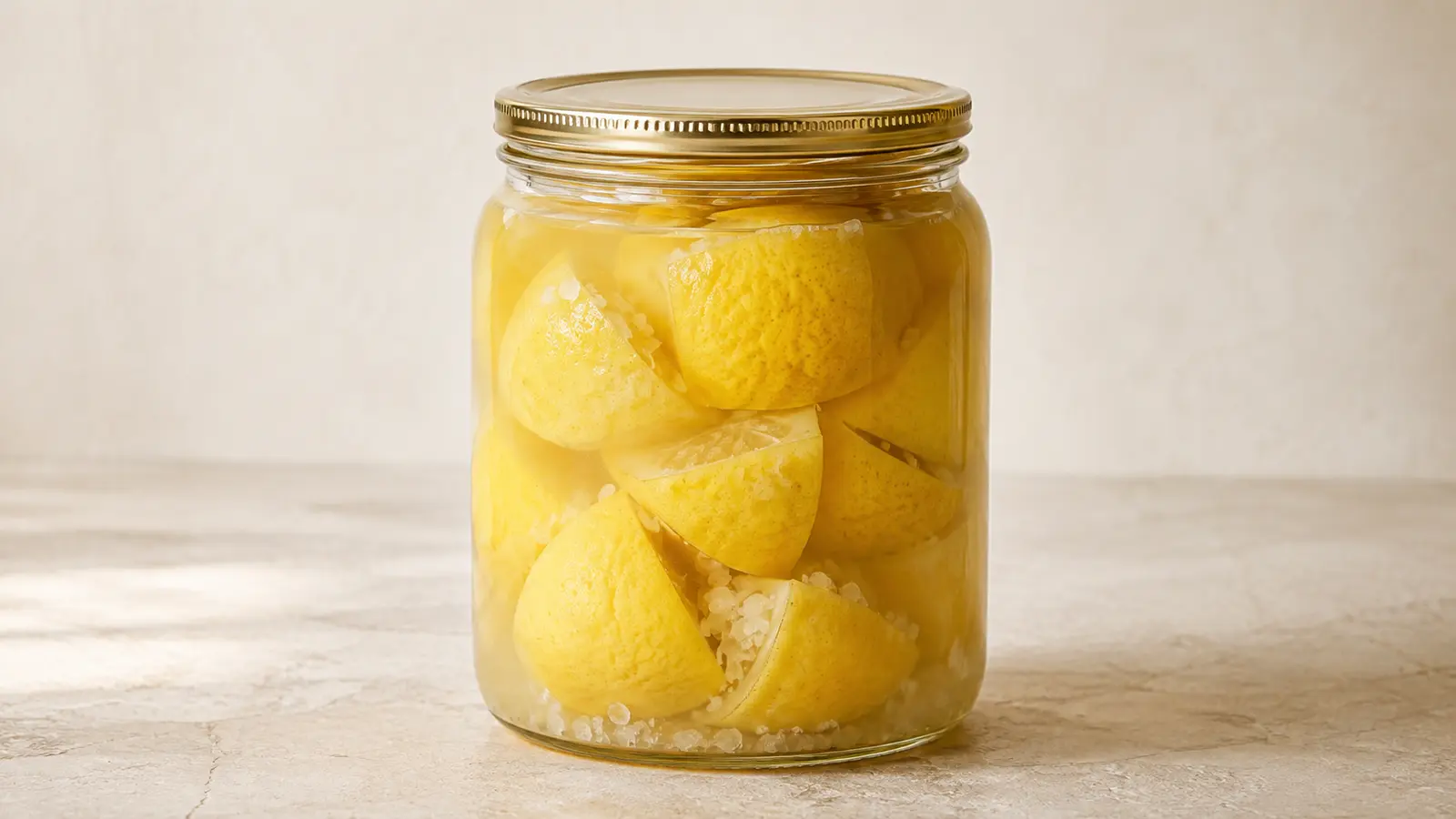
What preservation changes: rind texture, aroma, salt and bitterness.
Salt softens the rind and pulls liquid from the fruit while lemon acidity suppresses many unwanted organisms. The fragrance becomes deeper and less sharply acidic, while bitterness decreases. The final ingredient is still salty, which is why recipes use measured rind rather than whole lemon juice.
This is more accurately treated as a salt cure with fermentation-like changes than a predictable commercial fermentation. Temperature, lemon variety, salt and sanitation alter the process, so a calendar cannot overrule visible spoilage or official local guidance.
- Transformation cue: a properly cured rind bends easily and smells intensely lemony, while the white pith loses much of its fresh raw bitterness.
- Batch-size rule: one-liter jars are easier to inspect and chill than oversized crocks, and losing one small questionable batch is safer than trying to salvage a large mixed vessel.
Check current details: Morocco food safety authority — ONSSA
Lemon selection, non-reactive jar sanitation and weight-based salt.
Choose unwaxed, firm lemons without soft spots or broken skin. Scrub under running water and dry. Weigh the fruit after trimming stems; use 12 percent of that weight in non-iodized fine salt—120 grams salt for 1 kilogram lemons.
Wash jar, lid and tools in hot soapy water, rinse, then sanitize using a method approved for the equipment. Use a sound glass jar with a non-reactive lid; acid and salt can corrode exposed reactive metal.
- Weight rule: calculate salt from the exact trimmed fruit weight for each batch; cup measures and fixed spoon counts do not scale reliably across lemon sizes.
- Salt choice: use plain non-iodized salt without anti-caking flavor additions; decorative coarse crystals are harder to distribute at an exact percentage inside the cuts.
Cutting, packing and ensuring fruit remains covered.
Quarter each lemon from the blossom end while leaving the stem end attached, or cut completely into quarters for easier packing. Work measured salt into all cut surfaces. Pack tightly, pressing until juice begins to flow, and add every remaining gram of measured salt.
Add freshly squeezed lemon juice until the fruit is fully submerged. A clean non-reactive weight can hold pieces below the surface. Do not top with water, which dilutes acidity and salinity. Leave manufacturer-recommended headspace rather than forcing an overfilled jar closed.
- Submersion cue: check the top piece after every opening and add fresh lemon juice—not water—if normal absorption exposes an edge above the brine.
Fermentation timeline and normal versus unsafe visual/smell cues.
Label the jar and refrigerate immediately. Turn or gently invert a securely sealed jar daily for the first week to redistribute salt, then weekly. The rind generally softens over three to four weeks; larger whole-attached lemons may need longer.
Cloudy juice, softened rind and some settled salt can occur. Fuzzy growth, pink, blue, black or green colonies, a putrid odor, active leakage or a bulging damaged lid are not “good mold” to scrape away. Discard the entire batch without tasting.
- Process record: label fruit weight, salt weight, packing date and refrigeration date directly on the jar so a later safety decision is based on facts.
Refrigeration and conservative storage guidance.
Keep the cured jar refrigerated at 4°C/40°F or below and use clean utensils every time. Ensure remaining fruit stays beneath juice. This guide does not assign a long shelf life because home sanitation, salt measurement and refrigerator temperature cannot be verified.
A practical conservative approach is to make small jars and use them within three months once the rind has softened. Discard sooner if the jar changes unexpectedly. Never rely on smell alone to prove safety.
- Discard rule: never scrape mold from soft fruit and keep the remainder; the entire jar is one moist interconnected food system and should be discarded.
Rinsing, pulp-versus-rind use and how to reduce recipe salt.
Remove a lemon piece with a clean utensil and rinse briefly. Scrape away most pulp and white inner membrane when a recipe wants fragrant rind; use pulp sparingly because it is salty and acidic. Slice or mince only what the dish requires.
Reduce other salt in the recipe before cooking, then correct at the end. In chicken tagine, add rind and olives late. In dressings, mince very finely so concentrated pieces do not dominate one bite.
- Recipe adjustment: rinse and taste a tiny piece of rind before salting the main dish, because different cured lemons can vary more than a teaspoon of table salt.
Uses in chicken tagine, chermoula, salads and grains.
Preserved rind is central to chicken with olives and useful in tanjia, chermoula, cooked salads and grain dishes. Start with one-quarter lemon rind for a four-serving dish, then increase after tasting. It can also brighten beans or roasted carrots outside Moroccan cooking.
Do not substitute raw lemon slices and expect the same flavor; fresh pith stays bitter and the salt balance is different. If a recipe requires preserved lemon and none is available, choose a separate fresh-lemon adaptation and label it honestly.
- Portion practice: mince one quarter-rind at a time and return the jar promptly to refrigeration instead of leaving it beside the stove throughout cooking.
Check current details: Moroccan National Tourist Office — food and drink