
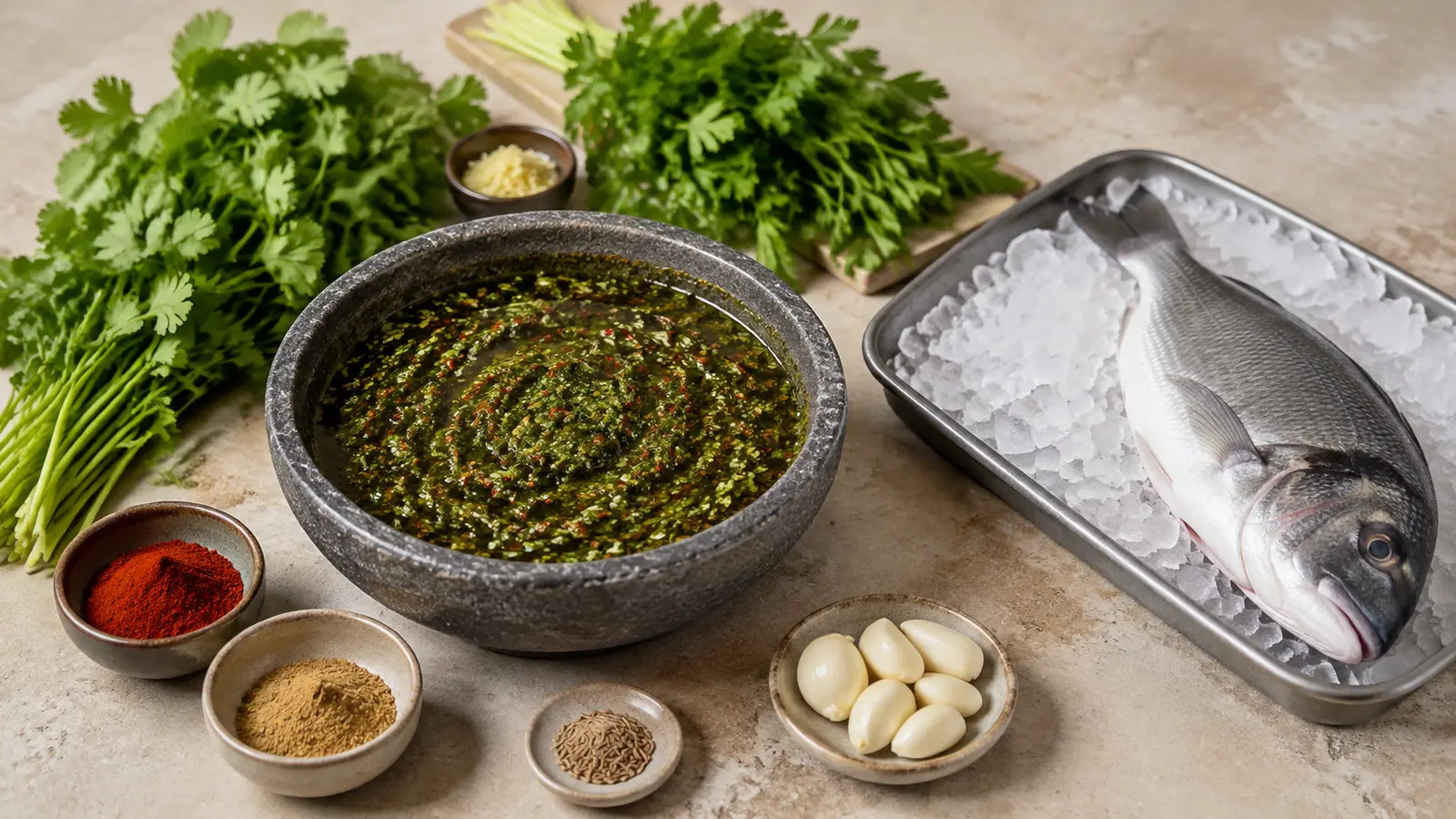
Chermoula as a family of preparations rather than one fixed sauce.
Some chermoulas are fresh and green, others cooked and redder with paprika; some use preserved lemon and others fresh juice or vinegar. The term describes a recognizable seasoning family rather than a single fixed sauce. Fish is the best-known partner, but vegetables absorb it beautifully.
This base is intentionally moderate in acid and salt so it can be adapted. A marinade for delicate fish should be looser and shorter; a cooked carrot or potato salad can take more lemon and cumin.
- Family-of-sauces cue: record whether a version was fresh, cooked, tomato-based or preserved-lemon-heavy instead of presenting every green herb mixture as interchangeable.
- Yield planning: one cup coats about one kilogram of fish or vegetables when a clean portion is also reserved for finishing; double the batch before raw food enters.
Check current details: Moroccan National Tourist Office — food and drink
Herb, garlic, cumin, paprika, acid and oil ratios.
For one cup, use equal weights cilantro and parsley, four garlic cloves, two teaspoons cumin, one teaspoon paprika, two tablespoons lemon juice and six tablespoons olive oil. Salt begins at three-quarters teaspoon and is corrected after any preserved lemon is included.
Cilantro stems add flavor when tender; thick parsley stems are better removed. Wash herbs, spin or pat very dry, and measure after drying so excess water does not dilute the marinade.
- Ratio check: dried herbs are not a direct substitute for 60 grams fresh herbs; make a separate dry spice rub if fresh cilantro and parsley are unavailable.
- Washing cue: rinse herbs before chopping, spin thoroughly and discard slimy stems; washing an already chopped pile bruises leaves and retains excess water.
Chopped, mortar and blended textures and when each works.
Hand chopping leaves distinct herbs and is ideal for spooning over grilled vegetables. A mortar crushes garlic and spices into the herbs, releasing aroma without making a purée. A blender coats fish evenly but needs short pulses and enough oil to move.
Do not run a blender until the mixture warms. Heat and over-processing bruise herbs and flatten their flavor. If a smoother sauce is needed, chill the jar and oil first and scrape between short pulses.
- Texture cue: chopped chermoula should show leaf pieces, mortar chermoula should cling as a paste, and blended chermoula should pour without becoming a green foam.
Fish marinade timing and cross-contamination controls.
Marinate sturdy fish steaks for 20 to 30 minutes and delicate fillets for 10 to 15. Longer acid contact can make the surface chalky without cooking the center safely. Keep fish covered in the refrigerator for the entire time.
Reserve clean chermoula before raw fish enters the bowl. Use separate utensils and plates, then cook fin fish to 63°C/145°F or follow stricter species-specific official guidance. Discard the raw-contact marinade unless it is transferred promptly to a pan and brought to a full boil as part of a cooked sauce.
- Separation rule: label the clean serving jar before raw fish is opened, then place it on a different refrigerator shelf to prevent utensil mistakes.
Vegetable, poultry and cooked-sauce adaptations.
Toss parboiled potatoes, cauliflower or carrots with chermoula before roasting, or spoon a clean portion over cooked vegetables. For poultry, use the same refrigeration and cross-contamination rules as fish and allow longer contact because acid penetration remains shallow.
A cooked chermoula sauce can begin by gently heating garlic and spices in oil before adding herbs and tomato. That is a distinct preparation; do not simmer the entire fresh batch and expect its bright herb character to remain.
- Vegetable cue: add half before roasting and half from the clean reserve after cooking to preserve both deep spice flavor and fresh herb aroma.
Salt, preserved lemon and chile variations by dish.
Preserved-lemon rind adds salt and perfume, so reduce both fresh lemon and salt before mixing. Chile may be cayenne, fresh pepper or harissa, each with different salinity. Taste a clean portion on the intended food rather than straight from the spoon.
For a mild vegetable dressing, omit chile and add one tablespoon water. For oily fish, increase lemon by one tablespoon. For shellfish, keep garlic moderate so sweetness remains visible.
- Preserved-lemon limit: begin with two tablespoons finely minced rind per cup; a larger amount can make salt correction impossible without doubling the whole batch.
Refrigeration, freezing and discard timing.
Fresh clean chermoula keeps in a covered container in the refrigerator for up to three days for best quality. Press a thin film of oil over the surface to reduce browning, but do not treat oil as a safety barrier. Freeze in small portions for up to two months for best aroma.
Any portion that touched raw seafood or poultry should be used in that cooking session or discarded. Label frozen cubes clearly so a raw-contact portion is never mistaken for a ready-to-eat sauce.
- Freezer cue: freeze clean chermoula in tablespoon portions and label the date; thaw in the refrigerator, not on the counter beside raw seafood.
Check current details: Morocco food safety authority — ONSSA