
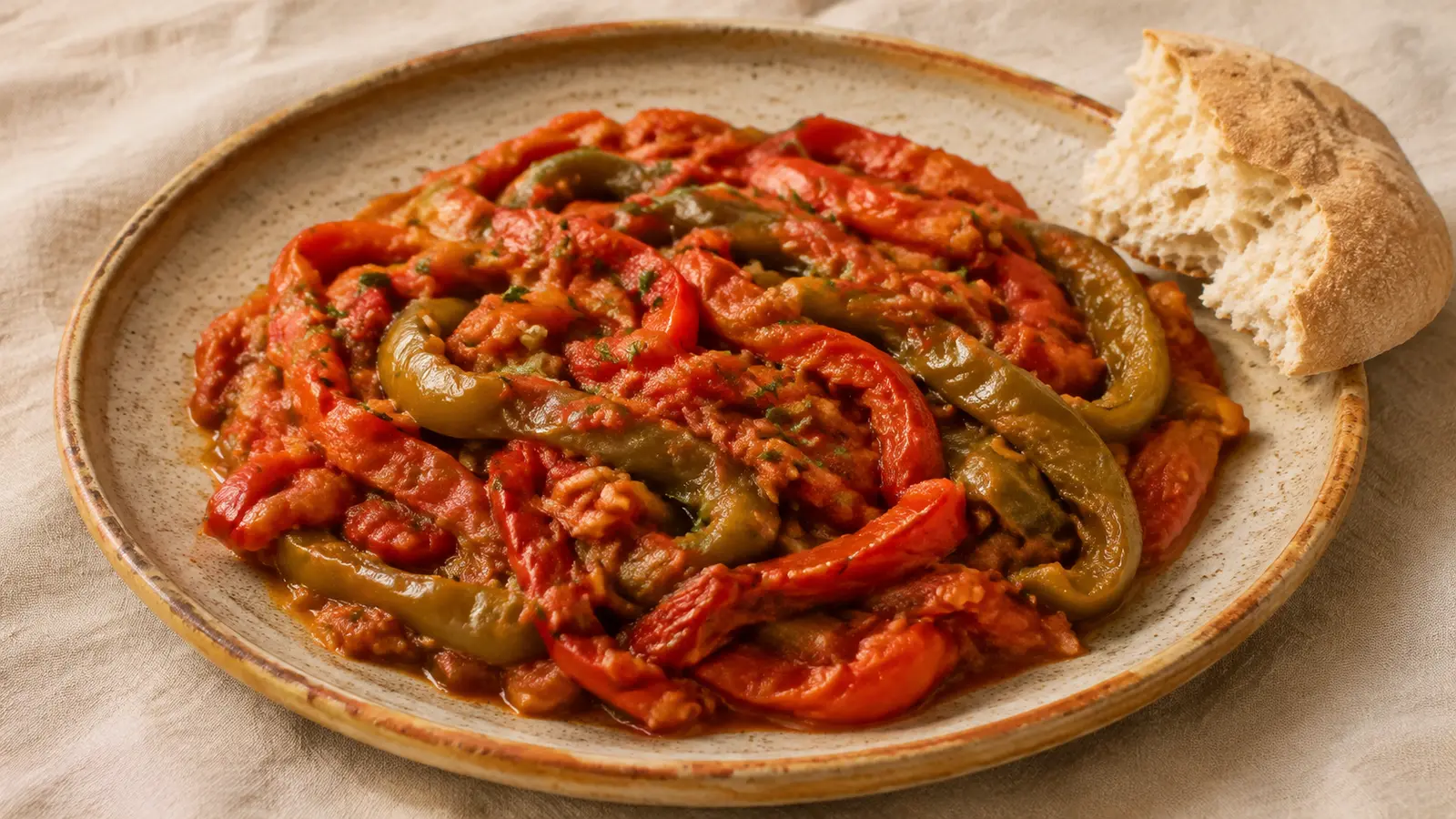
Taktouka versus zaalouk and other cooked Moroccan salads.
Zaalouk is based on eggplant and tomato; taktouka centers peppers and tomato. Other Moroccan cooked salads may use carrots, beets or zucchini. Treating all of them as the same “dip” loses the point of a table where several vegetable textures are served side by side.
Taktouka can be mild or carry chile, served warm or cool, and mashed to different degrees. The shared identity comes from roasted pepper sweetness, reduced tomato, garlic, cumin and paprika rather than one mandatory cut size.
- Identity cue: if eggplant is added, call the result a mixed cooked salad rather than taktouka so readers can understand what texture and flavor to expect.
- Table-planning cue: serve taktouka beside an eggplant salad only when the remaining dishes add crisp, briny or protein-rich contrast; two cooked tomato salads can otherwise feel repetitive.
Check current details: Moroccan National Tourist Office — food and drink
Choosing peppers and tomatoes for sweetness, acidity and low excess water.
Choose firm red and green bell peppers with taut skin; red supplies sweetness and green a slight bitterness. Roma or plum tomatoes are useful because they contain less seed gel, though ripe round tomatoes work when grated and cooked longer.
Very watery tomatoes require patient reduction before pepper is added. Taste raw tomato acidity before seasoning. Garlic should be fresh and cumin aromatic; stale paprika gives color without flavor.
- Produce ratio: roughly equal total weights of peppers and tomato before trimming yields a pepper-forward salad after the wetter tomato is reduced.
- Color plan: using both red and green peppers produces sweetness with a slight bitter edge; an all-red batch is valid but noticeably sweeter and softer in appearance.
Charring, steaming and peeling peppers safely.
Char peppers under a broiler, on a grill or directly over a gas flame only with proper ventilation and tools. Turn until skin is blackened on all sides while flesh softens. Transfer immediately to a covered bowl for ten minutes so trapped steam loosens the skin.
Peel with fingers or a small knife, not under running water, which washes away roasted flavor. Remove stem and seeds, collect clean juices separately and cut on a clean board. Discard any pieces contaminated by dirty char or raw-meat surfaces.
- Peeling cue: retain soft browned pepper flesh but remove loose carbonized flakes; a few smoky specks are flavor, a coating of black skin is bitterness.
- Ventilation check: broiling is the safest universal indoor recommendation; direct flame requires a stable grate, long tongs and a hood that actually exhausts outdoors.
Reducing the tomato-garlic spice base before adding peppers.
Cook grated tomato with oil, garlic, cumin, paprika, salt and pepper until thick enough to gather at the center of the pan. This takes longer than simply heating tomato. Add a spoonful of reserved clean pepper juice only if the base becomes dry before its raw flavor cooks away.
Fold in pepper after reduction and simmer uncovered. The pepper should gloss with sauce rather than float in it. Stir from the bottom to prevent garlic and tomato solids from scorching.
- Peeling cue: retain soft browned pepper flesh but remove loose carbonized flakes; a few smoky specks are flavor, a coating of black skin is bitterness.
Chunky versus finely chopped household textures.
For chunky taktouka, cut peppers into 1-centimeter strips and stir gently. For a finer household texture, chop to 5 millimeters and press lightly with the spoon during the final minutes. Do not blend: the mixture becomes foamy and loses the contrast between roasted pepper and tomato.
Whichever texture you choose, apply it consistently. A few giant slippery strips among finely chopped pieces make serving awkward and give uneven seasoning.
- Pan cue: tomato should sputter more slowly and mound around the spoon before the drained peppers enter, because peppers release another small amount of juice.
Final seasoning, olive oil and optional chile.
Add lemon juice only after the vegetables have concentrated. Taste for salt, then finish with olive oil and chopped cilantro or parsley. A small chile can cook with the tomato or harissa can be offered at the table.
If the salad tastes bitter, check whether too much burnt skin remained. More sugar will not fix carbonized flavor. Remove visibly black flakes, add more reduced tomato and serve the batch with a sweeter pepper mixture if necessary.
- Texture cue: choose strips for a plated side and fine pieces for scooping with bread; do not alternate cuts randomly within one batch.
Service temperature, storage and tagine/grill pairings.
Serve warm beside grilled foods, at room temperature with khobz, or cool as part of a salad spread. It complements chicken tagine and vegetable tagine, while its sweetness contrasts nicely with briny olives and preserved lemon.
Refrigerate within two hours and use within three to four days. Olive oil may firm when chilled; let the serving portion sit briefly at room temperature and stir. Freeze only if necessary, because thawed pepper loses some structure.
- Chile control: offer harissa separately when the salad accompanies several dishes, allowing heat without making every bite of the shared spread identical.
Check current details: Agricultural Development Agency — Moroccan terroir products