
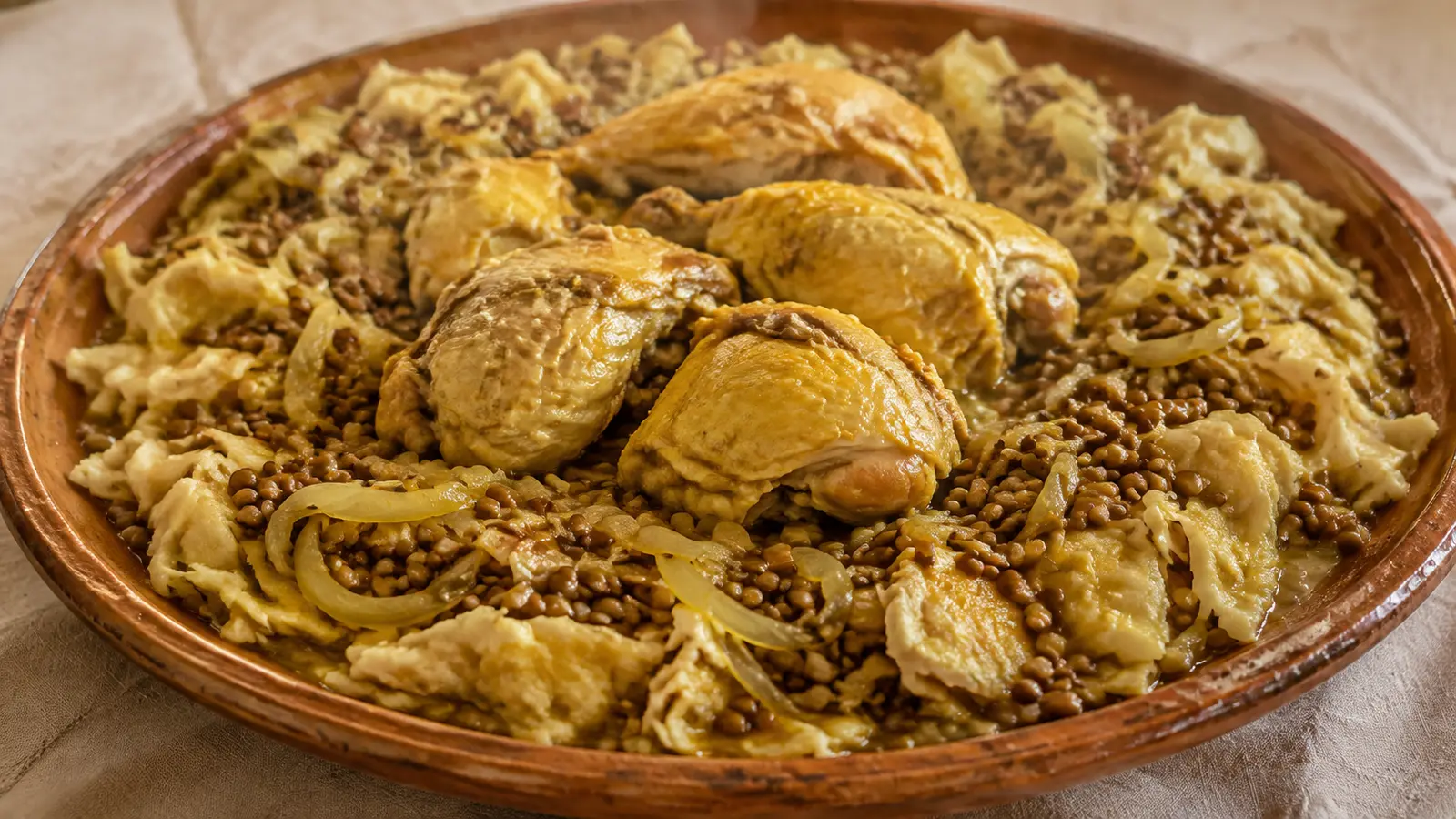
Rfissa's family and ceremonial context, with regional naming differences.
Rfissa is often connected with family care, postpartum meals and gatherings, though customs vary. Its practical logic is a generous one-pot chicken and lentil preparation stretched over hand-torn bread so broth and spice reach many diners.
Names for the bread base and exact seasonings shift by region and household. What remains consistent is the layered service: bread first, aromatic broth absorbed through it, lentils and onions, then chicken centered on top.
- Context cue: ceremonial associations enrich the dish’s story but should not be turned into health or postpartum claims that the recipe cannot support.
- Table plan: serve rfissa as the central dish with one crisp salad and tea afterward; another sauced main course competes with the bread’s careful broth absorption.
Check current details: Moroccan National Tourist Office — food and drink
Chicken, onion, lentil and fenugreek foundation; managing fenugreek bitterness.
Use whole fenugreek seeds, soak them for at least two hours and drain. Soaking softens the seed and removes some surface bitterness. Brown lentils add body without disappearing; rinse them and add only after the chicken has started cooking.
A large quantity of sliced onion cooks down into the sauce. Do not rush it with high heat: onion should soften beneath the chicken, not brown into a separate caramel note. Saffron, ginger, turmeric and pepper form the central profile.
- Fenugreek cue: soaked seeds should swell slightly and lose their hard center during simmering; adding extra raw seeds late leaves an unpleasant crunch.
- Bitterness correction: dilute and reduce a broth that is slightly too strong; sugar disguises the first taste but does not restore the intended savory balance.
Ras el hanout and herb balance without over-spicing.
Ras el hanout varies, so begin with one teaspoon for a six-serving pot. Smell the blend before using it; a strong clove, rose or cinnamon formula may need less. Add more at the end only if the defined ginger and saffron character still reads clearly.
Cilantro and parsley belong in the broth, tied in a bouquet or chopped. A tied bundle gives a clear sauce and is easy to remove; chopped herbs create a more rustic finish. Either path is valid if the amount is controlled.
- Blend cue: record the ras el hanout brand or formula because changing blends can alter clove, cinnamon and floral intensity more than changing half a teaspoon.
Making trid or msemen versus a transparent store-bought shortcut.
Trid is a very thin cooked bread torn into ribbons. Msemen is thicker and richer but absorbs broth well when torn into small pieces. Store-bought plain msemen is an honest shortcut if it contains no sweet filling; warm it before tearing so layers separate.
Do not use sweet pancakes or heavily browned flatbread chips. The base needs neutral wheat flavor and flexible layers. If making msemen, follow the dedicated guide and omit honey or breakfast toppings.
- Shortcut boundary: plain store-bought msemen changes the richness and thickness of the base but remains a clearer substitute than tortillas or sandwich bread.
Broth reduction and chicken doneness.
Simmer chicken gently over onions until it reaches 74°C/165°F, then remove it before it falls apart. Lentils and fenugreek continue in the broth until tender. Reduce uncovered until the liquid tastes concentrated but remains abundant enough to moisten bread.
Skim excessive surface fat, but retain a little for spice aroma. If the broth is thin in flavor, reduce rather than adding raw spice at the last minute. If too salty, add unsalted hot water and re-simmer before bread is involved.
- Broth quantity: reserve at least 250 milliliters before moistening the platter so late-arriving diners can adjust texture without dismantling the presentation.
Shredding, steaming and assembling the bread base.
Tear trid or msemen into 2- to 4-centimeter pieces and steam briefly until hot and flexible. Spread it loosely on a warm platter. Ladle broth in three passes, waiting between each so you can stop before the bread turns sodden.
Spoon lentils and onion across the moistened bread, arrange chicken above and pass extra broth separately. Diners can add more; they cannot remove it. This staged approach is the difference between tender rfissa and bread soup.
- Assembly cue: the first ladle should disappear into the bread within a minute; broth pooling at the platter edge means the next pass should wait.
Portioning, leftovers and reheating without sogginess.
Store bread separately whenever possible. Refrigerate chicken, lentils and broth in shallow containers within two hours and use within three to four days. Keep torn msemen wrapped and chilled or frozen according to its preparation date.
To reheat, warm broth to a simmer, heat chicken in a portion of it, and steam the bread separately. Assemble only what will be eaten. Already soaked leftovers can be reheated safely but will be softer; spread them in a shallow covered dish so the center heats evenly.
- Reheating cue: once bread has absorbed broth, use covered gentle heat and turn broad sections rather than stirring them into a paste.
Check current details: Morocco food safety authority — ONSSA