
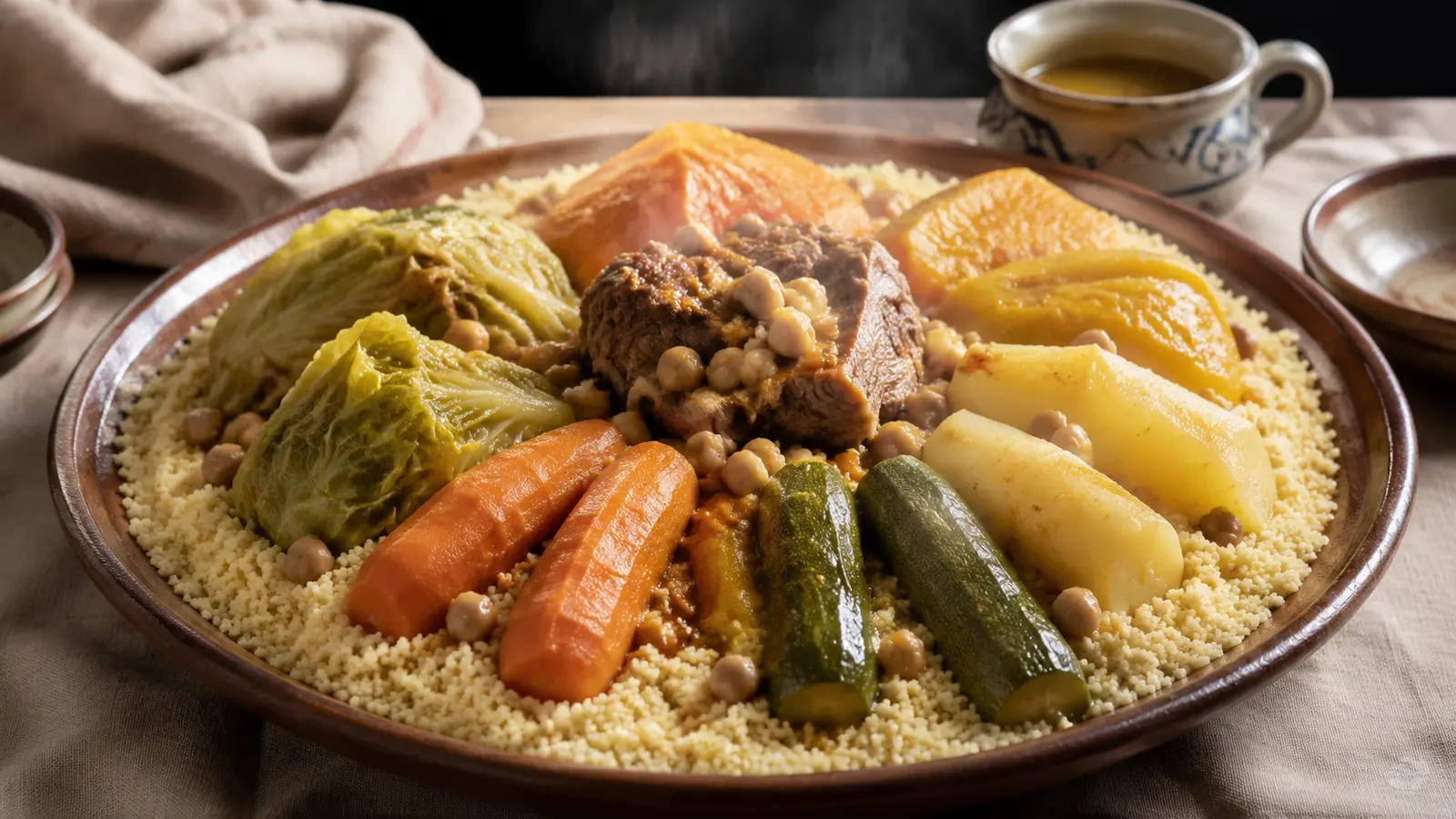
The seven-vegetable idea: symbolism versus flexible seasonal household practice.
The number seven carries cultural associations, yet market availability governs real cooking. Use onion and tomato for broth, then choose dense vegetables such as carrot and turnip, sturdy cabbage, and quick vegetables such as zucchini and pumpkin. Chickpeas count in some household tallies and not others.
Cut dense vegetables larger than quick ones because they cook longer. Potato can replace turnip, winter squash can replace pumpkin, and parsnip can stand in where turnip is unavailable. Keep zucchini late and whole or halved so it does not disappear into the broth.
- Vegetable planning: write the addition time beside each cut vegetable before the broth starts so a crowded gathering kitchen does not lead to everything entering together.
Broth structure, protein choices and vegetable addition order.
Browned meat is optional; this recipe uses lamb shoulder for a full broth, with a vegetarian path in the notes. Onion, tomato, ginger, turmeric, pepper and saffron create the base. Chickpeas and cabbage enter early, carrots and turnip follow, while zucchini and pumpkin wait until the final steaming stage.
The broth should be seasoned enough to flavor grain but not as salty as a finished soup, because reduction continues. Keep vegetables partly submerged and turn them gently rather than stirring. Cooked canned chickpeas enter later than soaked dried chickpeas.
- Broth cue: the meat and dense vegetables should cook in a steady simmer that moves the surface gently; violent boiling clouds broth and breaks edges.
Traditional three-stage steaming and hand-separating technique.
First rub dry medium couscous with oil, then sprinkle with water and rake between fingertips until clumps disappear. Steam uncovered above actively simmering broth until visible steam rises through the entire surface. Tip onto a wide tray, sprinkle again, separate and cool briefly before returning for the second stage.
Repeat for a third stage with salt and a little butter or oil. Each cycle hydrates the center while preserving separate grains. Wear heatproof gloves when handling the hot steamer and keep your face away from the steam when lifting it.
- Grain cue: after each wetting, squeeze a small handful and release it; properly separated couscous falls apart with light fingertip pressure rather than remaining a lump.
Couscoussier substitutes and what texture is lost with instant preparation.
A metal colander that fits securely over the broth pot can substitute for a couscoussier; seal gaps with a strip of damp cloth or flour-water paste, kept clear of flame. The grain must sit above liquid, not touch it. A bamboo steamer can transfer aroma and is harder to seal.
Instant couscous absorbs measured hot broth in a bowl rather than steaming. It is fast and edible, but softer and more uniform. If that is the available option, fluff with a fork and label the method honestly instead of claiming three-stage texture.
- Seal check: visible steam escaping around the pot-steamer seam instead of through the grain means the improvised gasket needs adjustment away from the flame.
Assembly, broth service and tfaya or buttermilk variations.
Mound couscous on a wide platter, make a shallow well for meat, and arrange vegetables in groups so diners can identify them. Ladle only enough broth to scent the top; pass the rest warm. Tfaya—caramelized onion and raisin—is a separate sweet garnish, not required for every seven-vegetable version.
Some regions and households serve fermented milk or buttermilk alongside couscous. Treat this as a variation, not a universal rule. Keep the primary broth savory and let guests add heat through harissa at the table rather than making the communal platter fiery.
- Platter check: arrange vegetables after they stop dripping so the mound stays defined, then pass additional broth in a jug instead of flooding the presentation.
Scaling for a gathering, cooling and reheating safely.
For a gathering, calculate about 80 to 100 grams dry couscous per adult and scale the pot by surface area as well as volume; an overloaded steamer cooks unevenly. Work in two batches if steam cannot move through the grain. Keep finished couscous covered loosely, not compressed.
Divide leftovers into shallow containers and refrigerate within two hours. Store broth separately so the grains do not swell into paste. Reheat couscous with a spoonful of water in a steamer or covered microwave-safe dish, and bring broth and meat to steaming hot before service.
- Scaling limit: a steamer basket filled deeper than roughly two-thirds needs more frequent separation and may be better divided into two batches.
Check current details: Moroccan National Tourist Office — food and drink