
Use context instead of a rigid Moroccan rulebook
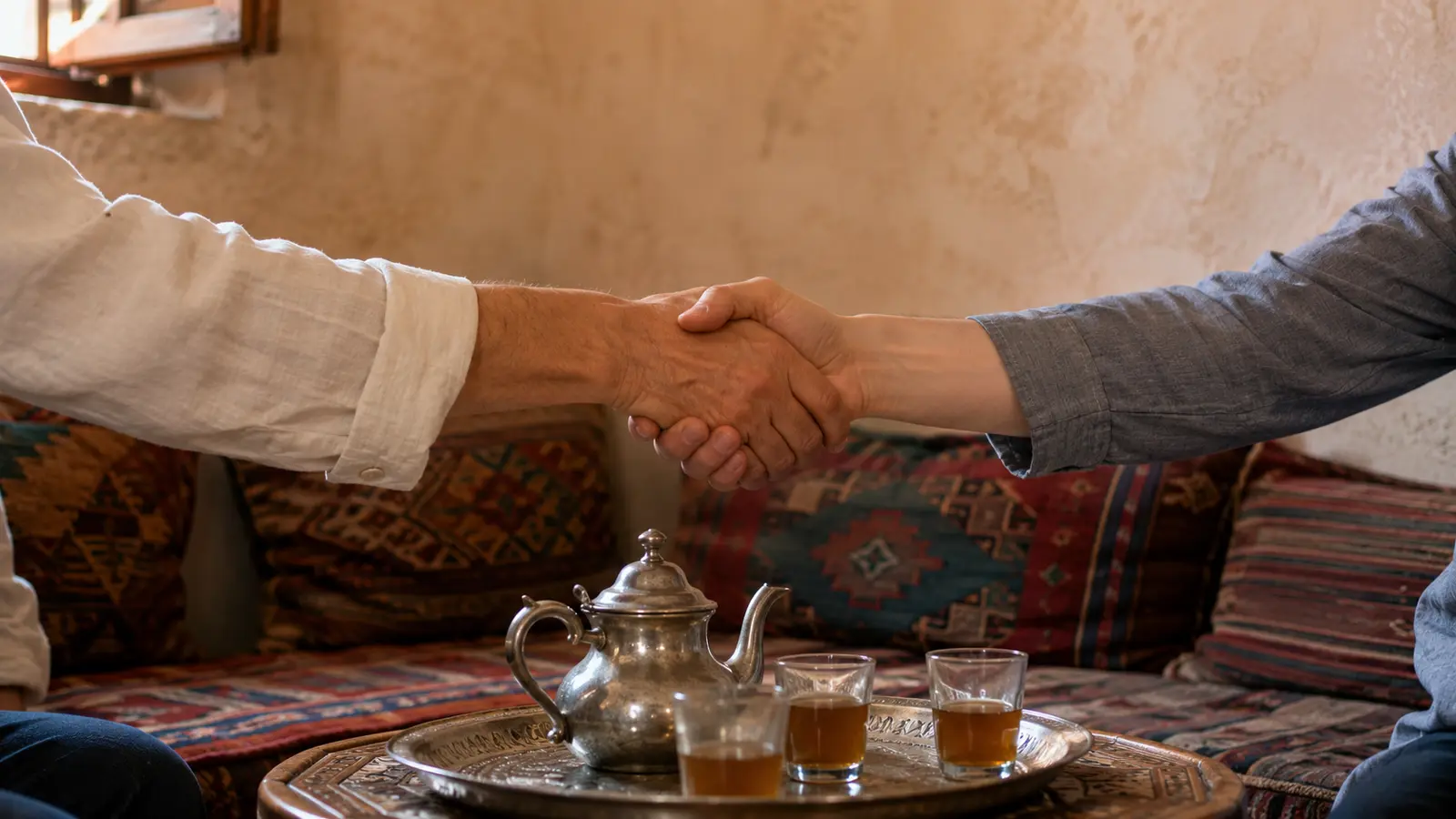
A business meeting in Casablanca, a family meal in Tetouan and a hiking stop in an Atlas village are different environments. Begin conservatively and let the people present set the level of formality. If someone uses a first name, offers a handshake or invites a more relaxed style, respond naturally rather than performing an imagined version of Moroccan culture.
Avoid turning ordinary differences into a spectacle. Ask a short, sincere question when unsure and accept no without pressure. Morocco includes Arabic and Amazigh identities, regional languages, varied religious practice and cosmopolitan communities; phrases such as Moroccans always do this are rarely accurate enough to guide a real encounter.
- Observe first, then follow the host or professional setting.
- Ask rather than assume when a custom affects another person.
- Describe regional variation instead of declaring one authentic behavior.
Check current details: Moroccan National Tourist Office
Dress for the street, beach, village, home or sacred setting
In cities, comfortable clothing with moderate coverage is adaptable and offers sun protection. Coastal resort areas are more relaxed, but beachwear is best kept to the beach or pool with a cover layer for nearby streets. Rural villages and family homes may be more conservative, so loose layers that cover shoulders and reach around the knee or lower reduce guesswork.
Dress does not cause harassment and cannot guarantee how anyone behaves. It is a tool for personal comfort and contextual respect, nothing more. Religious sites and special venues may have explicit requirements; read posted signs or ask staff. Pack one scarf or light layer that can add coverage without redesigning the entire wardrobe.
- City: breathable, comfortable and moderately covered
- Beach: swimwear at the water; cover layer for public streets
- Village or home: choose the more conservative layer when unsure
- Religious site: follow the site's specific access and clothing rules
Check current details: Official Morocco visitor information
Receive tea, meals and home invitations with attention
Tea may be hospitality, a business pause or an ordinary social moment. Accepting a glass is warm when convenient, but a polite decline is possible when health, time or preference requires it. Do not demand a ceremonial pour or stage the host for a photograph; participate in the conversation around the tea.
For a home invitation, ask whether shoes should be removed and follow the host's seating and serving cues. Bring a modest shared gift such as pastries, fruit or another item appropriate to the family after checking dietary considerations. Wash hands, use the serving utensils provided and avoid reaching across a communal dish without observing how others eat.
- A gracious decline needs no elaborate excuse.
- Ask before bringing alcohol or a highly personal gift.
- Follow the host's lead for shoes, seating and shared dishes.
Check current details: Moroccan food and drink culture
Ask before photographing people and lived spaces
A market stall, artisan workshop or blue-painted lane is also someone's workplace or neighborhood. Ask a person before making them the subject, and show the camera or phone clearly so the request is understood. A smile is not always consent; wait for an affirmative response, and accept refusal immediately.
Children require permission from a responsible adult. Ask artisans before photographing their process or products, particularly when a demonstration or shop visit is involved. Avoid photographing police, military or sensitive government locations, and obey no-photo signs. If payment is requested for a posed image, decide the amount before taking it.
- Ask first and wait for a clear yes.
- Obtain adult permission before photographing children.
- Do not block residential lanes or shop work for a composition.
- Respect sensitive-site and no-photo restrictions.
Check current details: Official Morocco destination information
Respect mosque access, prayer rhythms and Ramadan
Non-Muslim access varies by mosque, and many active mosques are not open for general tourist visits. Never follow worshippers through a doorway on assumption. Use sites explicitly open to visitors, follow staff instructions and avoid interrupting prayer, blocking entrances or photographing worship without consent.
Friday congregational prayer can increase activity around mosques and affect nearby traffic. During Ramadan, some businesses change hours and daytime eating patterns shift; evenings can be lively after the fast breaks. Dates move annually and exact religious observance can depend on the moon sighting, so update the calendar and ask each venue about current hours.
- Enter only when visitor access is clearly permitted.
- Keep voices and phones quiet near active worship.
- Check Ramadan and Eid dates fresh each year.
- Plan patiently around the period before sunset.
Check current details: Official Morocco useful information and calendar
Bargain respectfully and hold personal boundaries firmly
Bargaining belongs in some markets and shops, not every business. Ask the price, decide what the item is worth to you and make a calm counteroffer when the setting permits. If no agreement forms, thank the seller and leave. Do not bargain after accepting a service or consume food before learning the price.
Courtesy does not require accepting persistent help, unwanted attention or physical contact. A direct no, repeated once while moving toward a staffed public place, is appropriate. Use licensed guides with official identification where required, and seek hotel, shop, family or police assistance when a situation escalates. Respect and firmness can coexist.
- Clarify price and scope before a service begins.
- Do not confuse an unsolicited guide with an official guide.
- End an interaction clearly when it crosses a boundary.
- Move toward staff or other people if persistence becomes threatening.
Check current details: Official Morocco useful information