
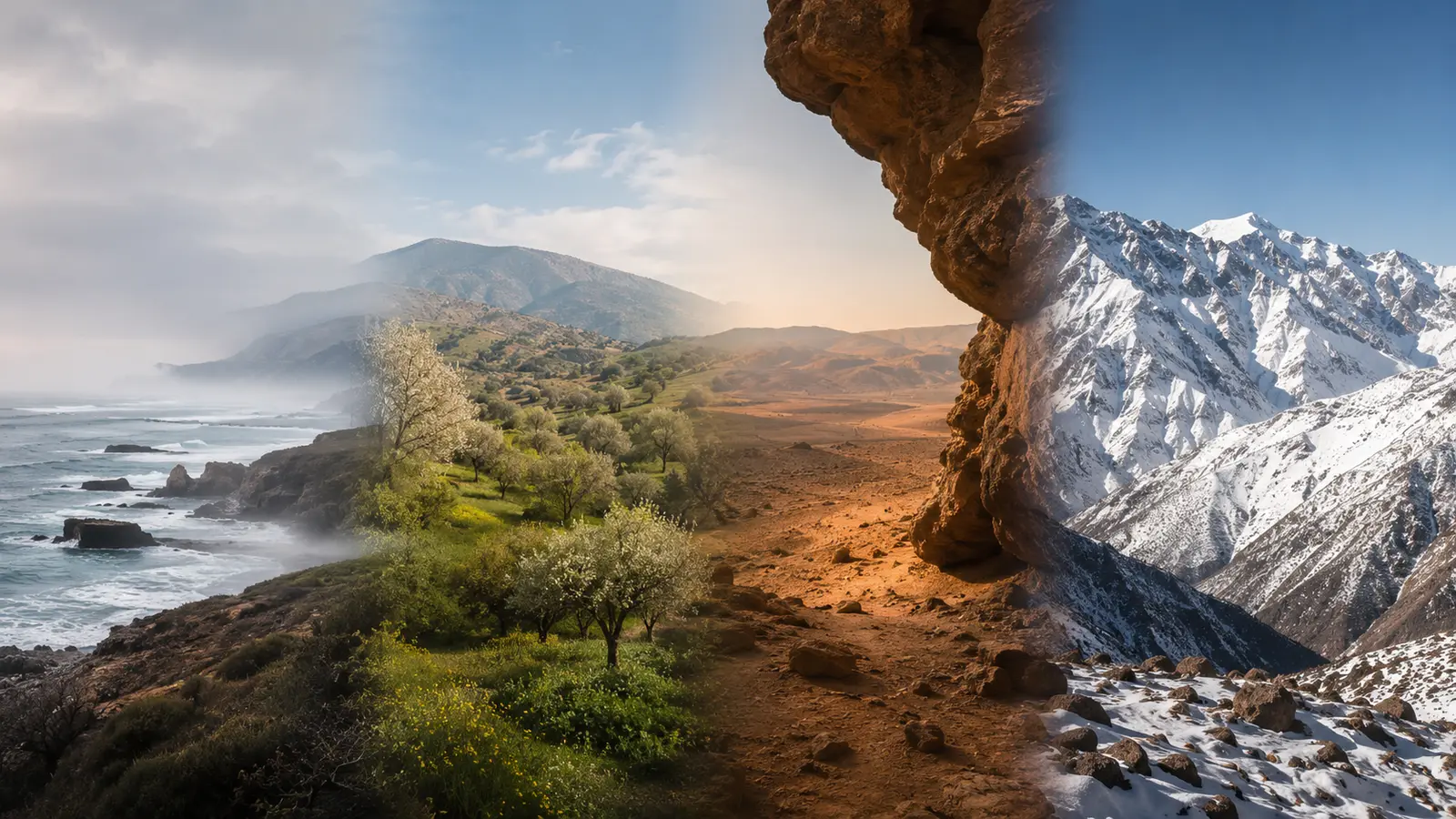
Why Morocco has no single best month
Tangier and the northern coast receive more winter rain than many visitors expect. The Atlantic coast is often milder but can be windy or misty. Marrakech and Fes sit inland, where summer afternoon heat and winter night chill are more pronounced. Elevation makes the High Atlas a separate weather system, while the pre-Saharan valleys and dunes add large day-to-night temperature swings.
Plan by the most weather-sensitive part of the trip. A city traveler can move museum visits around rain or heat; a hiker may lose an entire route to snow, storm or flood risk. A ferry passenger needs a buffer for Strait conditions, and a desert traveler needs a camp operator with a clear policy for wind or unsafe road access.
- Mediterranean north: wetter winters and variable Strait winds
- Atlantic coast: moderated temperatures, frequent breeze and local fog
- Interior cities: hotter summers and cooler winter nights
- Atlas: rapid changes with elevation, snow and storm exposure
- Desert margins: strong sun and wide day-to-night temperature range
Check current details: Morocco national meteorology service
A month-by-month decision guide
January and February suit cultural city travel and lower-elevation desert routes if you pack for cold nights; mountain snow can limit high routes. March and April often balance green landscapes and moderate city temperatures, but rain and late snow remain possible. May is frequently warm and versatile before the strongest inland heat, though exposed desert days already require serious sun planning.
June through August favor Atlantic and Mediterranean coast time more than dense inland sightseeing. September gradually eases inland heat; October is a strong mixed-route month but can still be hot in southern valleys. November often works for cities and desert travel with shorter days, while December brings cool nights, winter rain in the north and possible mountain snow. Always replace these patterns with a live forecast for the actual week.
- Winter: cities and desert possible; pack for rain, cold interiors and mountain snow.
- Spring: broadly versatile; watch late storms and rising southern heat.
- Summer: prioritize coast, shade and early or late activity inland.
- Autumn: useful for mixed routes; keep heat and flash-flood contingencies.
Check current details: National climate publications · Official Morocco useful information
Tangier and the north: rain, wind and ferry margins
Late spring through early autumn gives the north its most dependable outdoor rhythm, but beach conditions and Strait wind can change quickly. Winter has a quieter atmosphere and rich light between showers, yet travelers should expect rain layers, damp-feeling evenings and the possibility that a sea crossing changes or stops.
Do not anchor an international flight to a same-day ferry with no margin. Check the port and ferry operator on the day of travel, keep flexible onward plans and pack a wind-resistant layer even when the temperature looks mild. In summer, reserve sought-after coastal stays earlier and begin exposed medina or cliff walks before midday.
- Build a night of slack around weather-sensitive Strait crossings.
- Use forecast wind and marine warnings, not only the temperature icon.
- Northern winter lodging benefits from confirmed heating and good ventilation.
Check current details: Morocco weather vigilance
Marrakech, Fes and the interior require a day-and-night plan
Inland summer heat changes how a trip functions. Plan the most exposed walks early, protect the middle of the day for shade or rest, and return outside as temperatures ease. Air-conditioning should be confirmed rather than assumed, especially in historic lodging where room layouts and cooling systems vary.
Winter days can be bright and comfortable, but nights and tiled interiors may feel cold. Ask about heating, pack sleep layers and remember that sunset comes early. Spring and autumn are popular because the daytime schedule is easier, yet a heat spell can still occur; check the forecast before committing to a long walking tour or transfer.
- Schedule rooftops and gardens around sun exposure, not a rigid checklist.
- Carry water and use shade breaks before thirst becomes pronounced.
- Confirm both cooling and heating according to season.
Check current details: Moroccan National Tourist Office
Atlas weather is route safety, not background scenery
Elevation can turn a mild city forecast into freezing nights, snow, strong sun or storms. Winter and early spring may require mountaineering judgment on high routes, while spring snowmelt and heavy rain can affect streams and roads. Summer hiking shifts toward early starts, water management and avoidance of the strongest afternoon heat.
Ask a qualified local guide about the exact trail, elevation, equipment and current condition. Do not interpret a village forecast as a summit forecast. Build a lower-elevation alternative and travel insurance appropriate to the activity; if local authorities, guides or meteorological warnings advise against a route, change the route.
- Check both temperature and national weather warnings.
- Carry layers, sun protection and more water capacity than a city day requires.
- Never treat snow, flooding or heat warnings as an itinerary inconvenience to push through.
Check current details: Morocco national meteorology service
Sahara travel is about heat, cold nights and wind
Autumn through spring generally offers the most manageable desert travel, but cold winter nights surprise travelers and late spring can already be very hot. Summer is not simply the same itinerary with fewer clothes: extreme daytime heat can make transfers and activities unsafe or unpleasant, and some camps reduce services seasonally.
Choose an operator that states how it handles heat, wind, storms and road disruption. Pack eye protection, a light face covering, sun protection and warm layers when nights are cool. Avoid fixing a universal camel ride or camp schedule months in advance; ask for the current plan and accept changes when conditions demand them.
- Check the forecast for both the gateway town and the camp area.
- Ask whether the camp operates normally in the chosen month.
- Keep medication and drinking water accessible during the road transfer.
Check current details: Official Morocco destination information
Ramadan, Eid and domestic holidays change the daily rhythm
Ramadan follows the lunar calendar, so its dates move each year. Visitors can travel during Ramadan, but some restaurants and attractions adjust hours, daytime streets may be quieter and the period before sunset can be busy. Many places come alive after the evening meal. Respect people who are fasting and ask locally before assuming a normal meal or transport schedule.
Eid days and domestic school or summer holidays can increase family travel and close some services. Check the current calendar, then confirm each critical hotel, operator or transport leg directly. This is especially important around the start and end of Ramadan, when the exact religious date may depend on the moon sighting.
- Update Ramadan and Eid dates annually; do not reuse last year's calendar.
- Confirm meal service and opening hours with the individual venue.
- Allow extra patience near sunset and on major family-travel days.
Check current details: Official Morocco useful information