
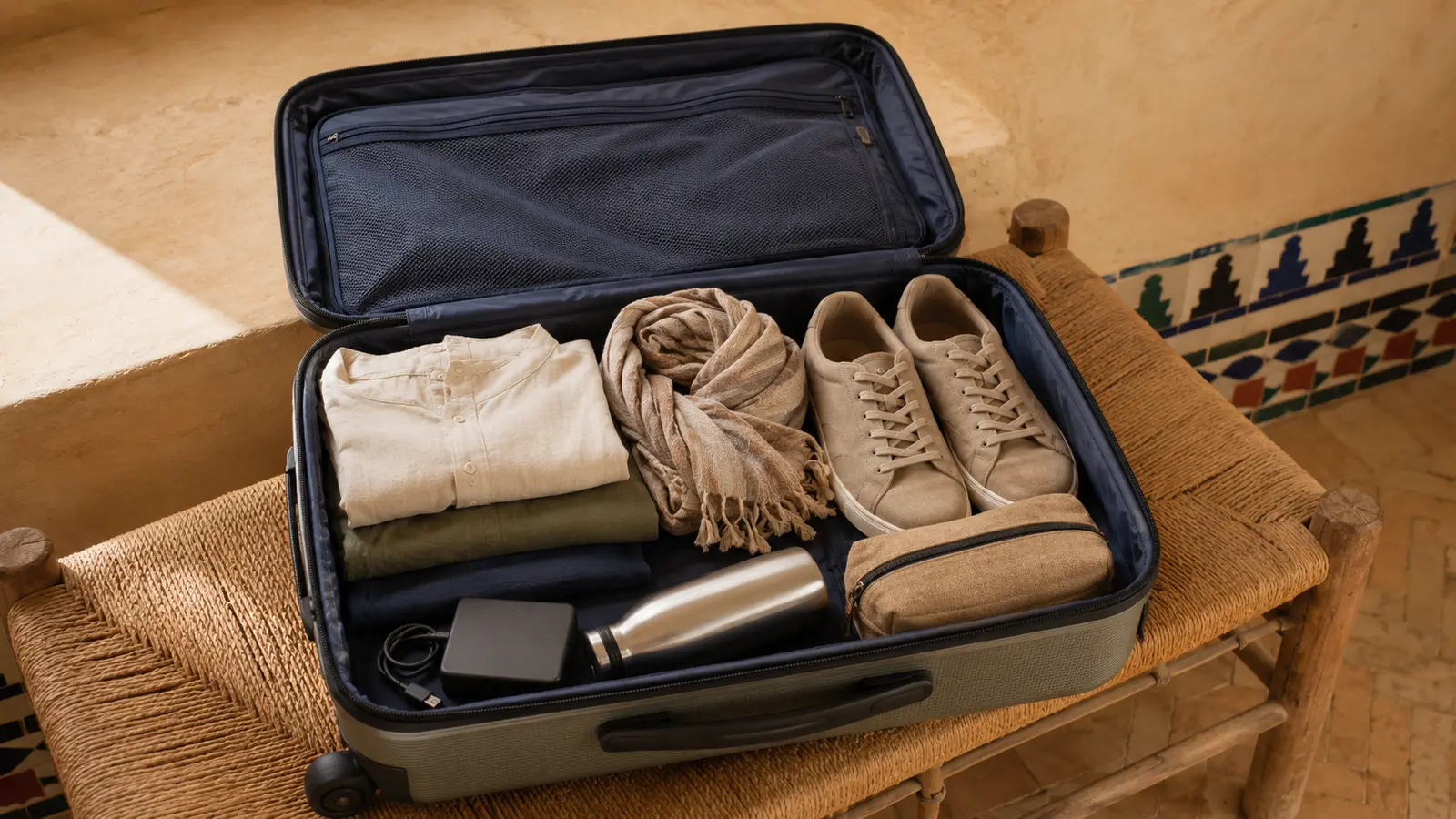
Build a universal core, then add one regional module
The universal core is compact: breathable tops, comfortable trousers or longer bottoms, underwear, sleepwear, a light warm layer, a light rain or wind shell, dependable walking shoes, sun protection, personal toiletries, medication, chargers and a small day bag. Choose colors and pieces that can be worn repeatedly rather than one outfit for every photograph.
Add a coast module with wind protection and swimwear; a winter module with warmer sleep and indoor layers; a mountain module based on guide and route advice; or a desert module with sun, dust and cold-night protection. If the route spans several zones, prioritize versatile layers rather than packing four separate wardrobes.
- Universal core: washable layers, walking shoes, shell, sun protection and essentials
- Coast: wind layer, swimwear and quick-dry item
- Winter: insulating layer, warm sleepwear and rain protection
- Atlas: route-specific footwear, warmth and safety gear
- Desert: sun coverage, eye protection, dust layer and night warmth
Check current details: Official Morocco useful information
Pack adaptable clothing for climate and context
Loose, breathable garments that cover shoulders or reach near the knee are practical for strong sun and many city, village and home settings. That is context-aware preparation, not a claim that one outfit guarantees treatment. Pack clothes in which you can walk, sit on a low cushion and move through a busy market comfortably.
Beachwear belongs at a beach or pool; carry a cover layer for the route there. A scarf is useful for sun, wind, dust or an unexpected cool evening, but visitors do not generally need to imitate local dress. In winter, remember that a bright afternoon does not guarantee a warm tiled room after sunset.
- Breathable daytime layers
- One warmer mid-layer even in many shoulder-season itineraries
- Wind or rain shell appropriate to region
- Swimwear plus a route-to-beach cover layer
- Sleepwear warm enough for the lodging, not only the outdoor forecast
Check current details: Morocco official travel information
Choose medina footwear for grip, dust and long days
Medina surfaces combine polished stone, uneven steps, ramps, dust and occasional wet patches. Choose closed or secure walking shoes with tested grip and enough toe room for hours on foot. Break them in before travel. A brand-new hiking boot is not safer if it causes blisters on the first day.
Bring a small blister kit and dry socks. Sandals can work for relaxed urban or beach time when they stay securely on the foot, but thin flip-flops are poor tools for long cobbled walks. Mountain routes need footwear selected for the actual terrain and season with the guide, not ordinary city sneakers by default.
- One broken-in walking shoe with reliable tread
- Optional secure sandal or lightweight second shoe
- Blister dressings and a few spare socks
- Specialist mountain footwear only when the route requires it
Prepare medication, prescriptions and conservative health supplies
Carry prescription medication in original labeled packaging, with enough for delays, and keep it in cabin baggage. Ask the Moroccan embassy or appropriate authority whether any controlled medicine requires documentation. Bring a copy of the prescription using generic drug names and a short medical summary for significant conditions.
A compact kit can include sunscreen, oral rehydration salts, adhesive dressings, blister care, hand sanitizer, an appropriate insect repellent and familiar over-the-counter items approved by the traveler's clinician. Do not build a private pharmacy or take antibiotics without medical guidance. CDC recommends a travel-health consultation at least a month before travel when possible.
- Prescription medication plus delay margin
- Prescription copies and generic names
- Sun, blister, hand-hygiene and hydration supplies
- Insurance and medical-assistance details
Check current details: CDC Travelers' Health — Morocco
Set up phone, power, camera and offline documents
Morocco commonly uses European-style two-pin sockets, but verify the accommodation and equipment before relying on one adapter. Pack the correct adapter, compact charger, cables and a power bank that meets airline battery rules. Label similar chargers and keep the power bank in cabin baggage, never checked luggage when the airline prohibits it.
Download offline maps, tickets, insurance details and the first accommodation's address before departure. Keep protected digital copies of essential documents and a separate paper backup of emergency contacts. A camera adds batteries and memory cards; decide whether the phone already meets the need before carrying equipment that attracts attention and weight.
- Compatible plug adapter and multi-device charger
- Airline-compliant power bank in cabin baggage
- Offline maps and locally saved reservations
- Emergency contacts and document backup
- Optional camera batteries and memory card
Check current details: Official Morocco useful information
Use luggage you can control on trains and coaches
A medium carry-on or manageable backpack is often easier than a large hard case on stairs and pedestrian lanes. Use a small day bag that closes securely and sits where you can see or feel it in crowds. Keep passport, phone, cards and medication in a consistent inner location rather than moving them between pockets throughout the day.
On trains and coaches, keep essentials with you and place only replaceable items in the larger bag. Add a simple identifier, not a visible home address. A small lock can deter casual opening but does not make luggage safe to leave unattended. In cafés, keep the bag attached to you or between your feet rather than hanging it behind a chair.
- One main bag you can lift without assistance
- Closing day bag with an inner valuables pocket
- Separate backup card and emergency cash
- Simple luggage identifier and optional small lock
Check current details: CDC Morocco personal security guidance
Buy ordinary consumables locally and run one final check
Cities sell toiletries, tissues, snacks, bottled water and ordinary clothing, so do not sacrifice half the bag to common consumables. Bring specialty medication, a preferred technical sunscreen, uncommon sizes and activity-specific equipment when substitutes would be difficult. Leave room for ceramics, textiles or food products while considering airline, customs and breakage limits.
The night before departure, check the forecast for every region, confirm luggage allowances and remove prohibited items. Put identification, entry documents, medication, one payment method, phone, cable and the first address in cabin baggage. If those items are present and the bag is carryable, the packing system has done its job.
- Passport, entry authorization when required and tickets
- Medication and essential health items
- Two payment methods stored separately
- Phone, charger, adapter and offline maps
- Weather-appropriate layers and broken-in footwear
- First-night address and transfer plan
Check current details: CDC Morocco packing and health guidance · Official Morocco useful information