
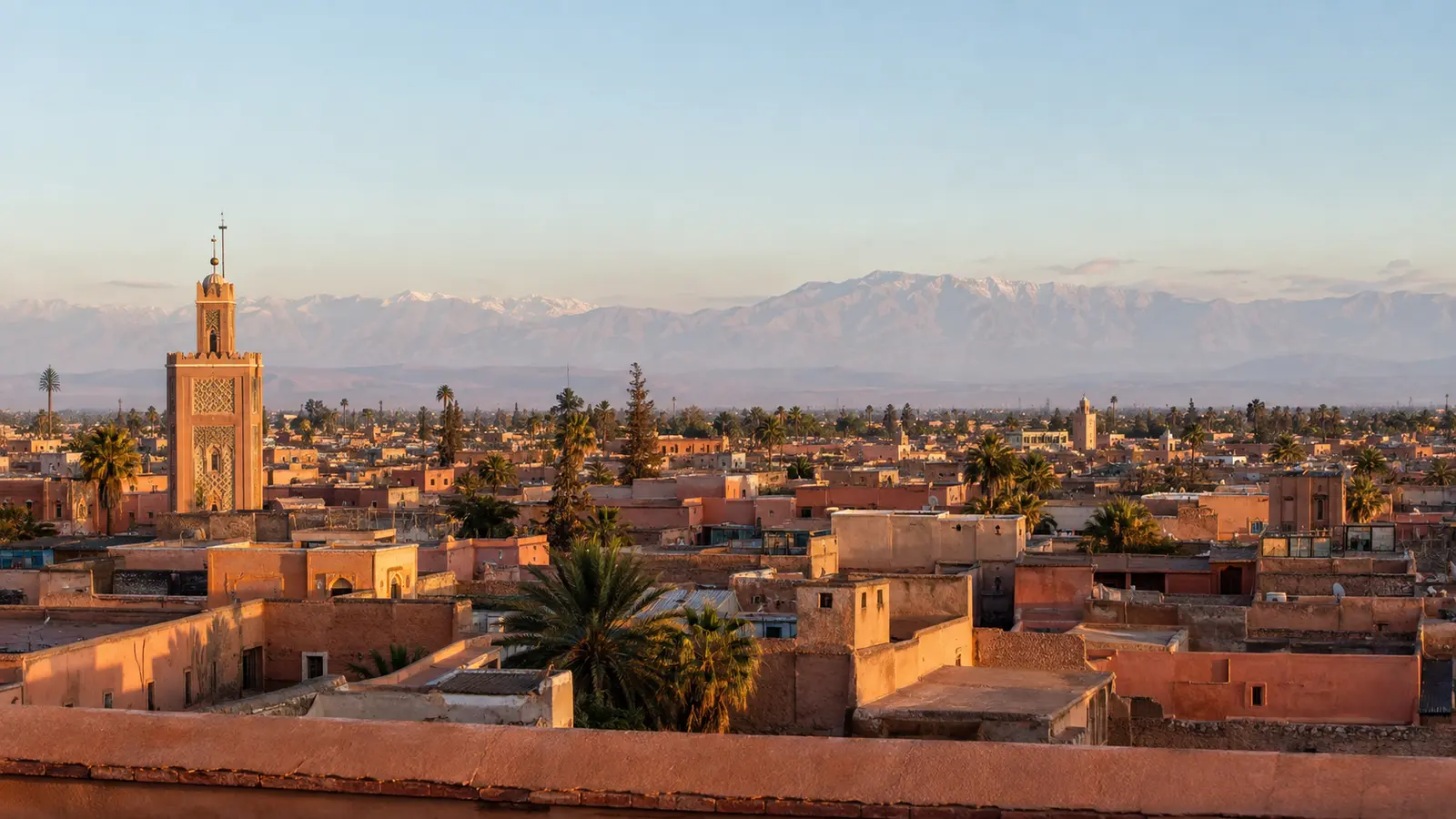
How Marrakech is organized
The medina contains the historic walled core and many riads, while Gueliz provides modern streets, shops and services. Hivernage is associated with larger hotels and nightlife; the Palmeraie spreads farther out and is not a walk from the central square. Choose one base and plan transfers deliberately. A medina address may be pedestrian-only for the final approach, which matters with luggage.
A medina riad may be only a few hundred metres from a gate yet require turns that feel opaque on arrival. Request a staff meeting point if the route is complicated. In Gueliz, road access is easier but the square and souks require transport. The best base is therefore the one that removes friction from the activities you value most, not the one with the broadest neighborhood label.
- Medina for historic immersion
- Gueliz for modern access and services
- Hivernage for larger-hotel infrastructure
- Palmeraie requires planned transport
Check current details: UNESCO Medina of Marrakesh record · UNESCO — Jemaa el-Fna safeguarding project
Day one: orientation before ambition
Start with the Koutoubia exterior and surrounding open space to understand the medina’s edge, then enter Jemaa el-Fna in daylight before committing to a controlled souk loop. Use one recognizable market axis and return to the square rather than following every offered shortcut. Pause before evening, then revisit the square after dark only if energy and comfort support it.
Jemaa el-Fna changes across the day. Daylight makes the square easier to read; sunset adds crowds and performances; late evening changes food and transport pressure. Observing it twice is more useful than remaining there continuously. If an interaction begins without a clear request—photograph, henna or object placed in your hand—decline promptly and step away before a price dispute develops.
- Save the riad’s nearest gate
- Keep the first souk loop short
- Use daylight for orientation
- Return rested for evening activity
Day two: palaces, museums and gardens
Group sites in the southern medina or another compact cluster and verify which are open before walking there. One palace, one museum and a long lunch usually make a richer day than five interiors. A timed garden may sit outside that cluster, so reserve a specific slot and allow transfer time. Never rely on a screenshot of old admission hours or a reseller’s calendar alone.
The Bahia Palace area, Saadian Tombs and other southern-medina sites can form a coherent cluster when current access supports it. Majorelle and other gardens require a separate transfer and often a timed ticket. Put the reservation on the day only after confirming travel time; a sold-out official slot should not be replaced automatically with an unverified street reseller.
- Check official hours that morning
- Choose depth over quantity
- Reserve timed sites through the official channel
- Keep one indoor fallback for heat
Day three: food, craft or a scoped excursion
Use the final day to follow an interest: a cooking activity with transparent inclusions, a focused craft visit, the mellah and food markets, or one excursion that does not promise impossible distances. If heading beyond Marrakech, confirm pickup, guide status, meal arrangements and return time. A nearby valley or desert-like landscape is not the Sahara; describe it accurately when comparing options.
A cooking activity should identify the language, market component, group size, recipes, meal, dietary handling and cancellation terms. For craft, ask whether the visit is educational, commercial or both. Day excursions should name the destination precisely and disclose driving time. “Atlas,” “desert” and “valley” are not interchangeable products simply because they leave from Marrakech.
- Pick one main interest
- Confirm what a tour includes
- Do not label Agafay as the Sahara
- Protect the final evening from a late return
Jemaa el-Fna as living heritage
UNESCO recognizes the square’s oral and performance traditions, but today it also concentrates food stalls, sellers, musicians, photographers and animal displays. Observe before participating, ask the price before accepting anything and avoid activities that compromise animal welfare. For food, choose a stall by visible turnover, cleanliness and clear ordering rather than by the most forceful invitation.
Animal-photo encounters involving monkeys or snakes raise welfare and safety concerns and can produce payment disputes; the clearest choice is not to participate. At food stalls, establish the order and price, watch how ingredients are handled and keep the meal proportional to the rest of the evening. The square’s heritage is larger than any one paid interaction.
- Agree prices before accepting a service
- Decline animal-photo encounters
- Keep valuables secure in crowds
- Choose food by turnover and hygiene
Taxis, airport transfers and riad access
Cars cannot reach every medina door. Obtain the exact drop-off gate, a contact number and a map pin from the accommodation before arrival. At the airport, use the current official transport arrangement or a pre-agreed transfer; in town, confirm meter or fare practice before moving. Never hand luggage to an unsolicited helper without agreeing destination and payment.
For a medina departure, ask the host how long luggage takes to reach the vehicle point at the actual hour you are leaving. A five-minute map distance can expand with carts, crowds and a wrong turn. Airport transfer confirmation should include pickup name, contact and gate; “outside the riad” is not meaningful when cars cannot enter the lane.
- Save the vehicle-access point
- Keep accommodation contact offline
- Agree transport terms first
- Allow a final walking segment
Check current details: UNESCO Medina of Marrakesh record · UNESCO — Jemaa el-Fna safeguarding project
Heat, crowds, Ramadan and seasonal pacing
Summer heat favors early starts, a long midday pause and evening activity; winter nights can be cold despite warm afternoons. Rain can change paving and excursion roads. During Ramadan, opening and meal rhythms may shift, while evenings become more active after the fast. Respect people who are fasting and verify current hours rather than expecting one schedule all year.
In hot months, place outdoor monuments in the morning, reserve shaded interiors for late morning and return to the accommodation during peak heat. In winter, a sunny courtyard can cool rapidly after dark, so heating details matter when booking. Ramadan evenings can be lively and rewarding, but travelers should allow staff and drivers time to break the fast safely.
- Carry water and sun protection
- Use the middle of hot days for rest
- Pack a layer for cool evenings
- Recheck hours around religious holidays