
The region beyond its film credits
The High Atlas crossing links Marrakech with plateaus, valleys and oasis corridors around Ouarzazate. Productions use the light and architecture, but communities, farms and transport routes existed independently of cinema. Use film locations as one interpretive lens, not the definition of every kasbah. The environment is dry and exposed, while seasonal water and mountain weather still shape movement.
The road south reveals changes in geology, settlement and agriculture that deserve more than a windshield glance. A knowledgeable driver or guide can explain those transitions without turning every overlook into a sales stop. Film references are useful when tied to a confirmed location and production, but they should never displace the people maintaining the landscape today.
- Separate film history from local history
- Recognize working villages and agriculture
- Plan around exposed heat and mountain weather
Check current details: UNESCO Ksar of Ait-Ben-Haddou record · Moroccan National Tourist Office — rural heritage
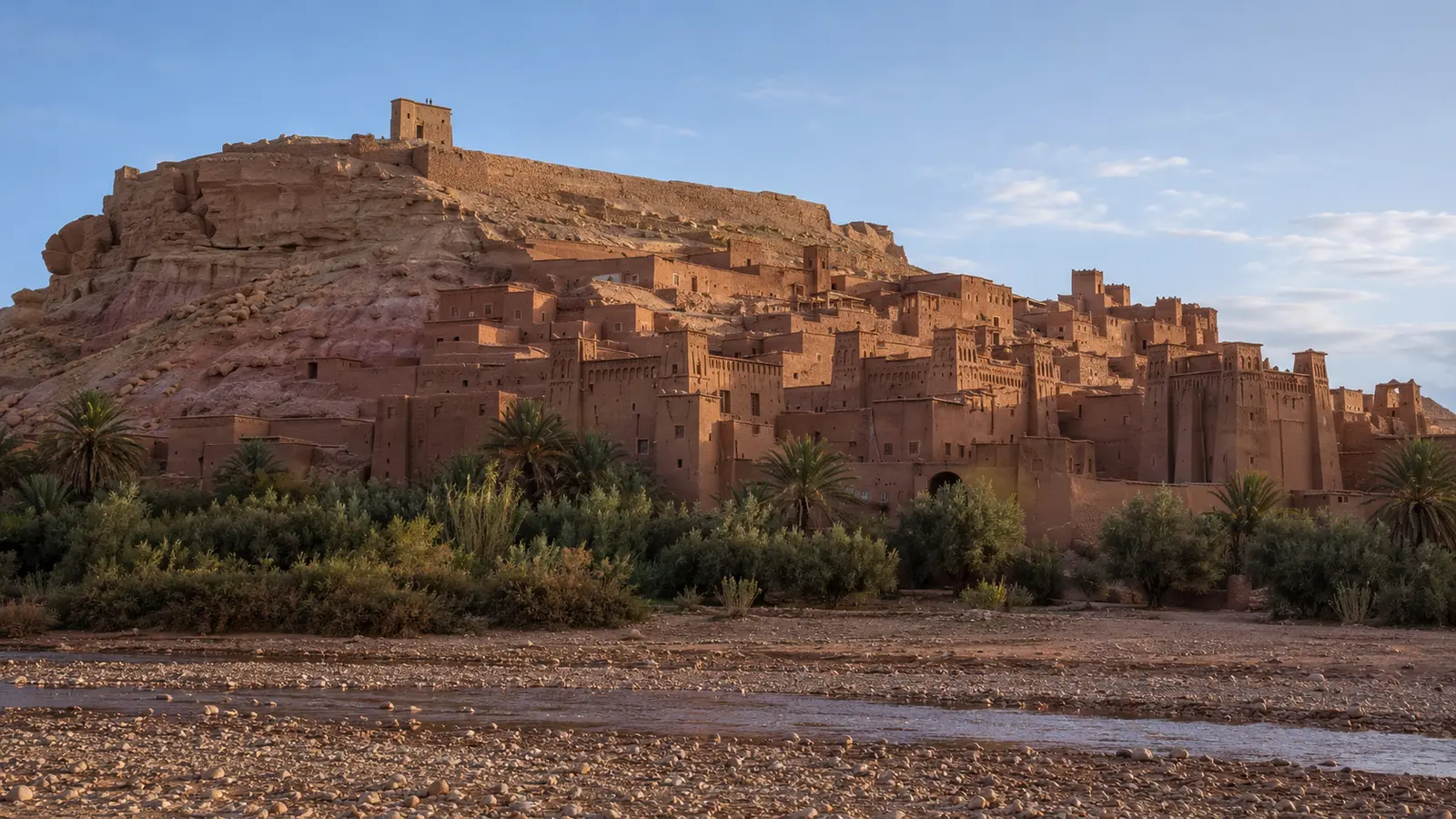
Ait Ben Haddou as a living earthen ksar
UNESCO recognizes the ksar as a group of earthen buildings within defensive walls, representative of southern Moroccan architecture. Some residents and livelihoods remain connected to the site. Do not describe it as abandoned or merely a set. Use official paths, respect private thresholds and understand that repairs in earthen architecture are part of maintaining a vulnerable built environment.
Earthen buildings require ongoing repair, and visual differences between restored and weathered walls are part of that story. Use a local guide who can distinguish public route, residence and paid interior. Buying tea or crafts may support a household when terms are clear; it does not authorize photography beyond the space offered.
- Use UNESCO context
- Keep out of private spaces
- Support permitted local services
- Do not climb fragile walls
Walking the ksar
Approach only by the currently safe and permitted crossing, then climb gradually through lanes and public terraces. Heat and glare can be substantial; carry water and avoid the central afternoon when conditions are severe. A higher viewpoint is optional, not a requirement. Ask before photographing residents or interiors and do not block narrow routes with staged portraits.
The riverbed approach changes with water and infrastructure. Follow the route in use that day instead of reproducing an old crossing from a blog. During the ascent, shaded pauses are limited, so an early or late visit can be more comfortable. Descend before the light disappears from uneven steps and lanes.
- Check the day’s river crossing
- Wear shoes with grip
- Turn around before heat becomes a problem
- Stay on public routes
Ouarzazate studios and city stops
The Taourirt area, cinema museums and commercial studios can provide production context, but access depends on filming, restoration and operating schedules. Verify the official venue on the day and ask what part of a studio ticket is actually open. One substantial visit is enough alongside Ait Ben Haddou; adding multiple sets often leaves no time to understand the city or eat properly.
Studio access can change when production is active, and some sets are facades rather than durable buildings. Ask what the ticket covers and whether a guide is included. In Taourirt, separate the historic kasbah context from unrelated film claims. A closed studio is a reason to deepen Ait Ben Haddou or the city, not to pressure staff for access.
- Check official access
- Ask which sets are open
- Choose one main film-related stop
- Keep lunch and rest in the schedule
Tizi n’Tichka and road uncertainty
The High Atlas road from Marrakech includes curves, elevation, construction risk and winter weather. Nominal map time is not a promise. Use an experienced, rested driver; insist on seat belts; avoid pressure to overtake or speed; and carry layers, water and motion-sickness preparation if relevant. A closure or snow event should change the trip, not provoke an improvised hazardous detour.
Winter forecasts for the Atlas should be checked close to travel, and a local driver’s decision to delay deserves respect. In any season, curves and construction make phone reading uncomfortable, so download necessary information before the crossing. Motion sickness, food and bathroom breaks should be discussed early rather than only after discomfort becomes severe.
- Check weather and road notices
- Use a rested driver and seat belt
- Do not schedule a tight evening connection
- Accept route changes for safety
Day trip or overnight
A same-day Marrakech return spends many hours in transit and is defensible only with an early start, limited stops and safe conditions. One night in Ouarzazate or near Ait Ben Haddou allows a slower walk and daylight arrival. For Dades or Merzouga, the overnight prevents stacking the mountain crossing with another long road leg and reduces pressure to arrive after dark.
An overnight also changes the light available at Ait Ben Haddou and removes the need to cross the pass twice in one day. Travelers continuing to Dades can leave after breakfast and arrive with time to orient. The extra night should sit where it reduces the longest drive, not where a package happens to include a hotel.
- Day trip: one major site and strict scope
- Overnight: deeper visit and safer onward route
- Never promise a sunset and a fast night return
Check current details: UNESCO Ksar of Ait-Ben-Haddou record · Moroccan National Tourist Office — rural heritage
Responsible guides and purchases
A local guide can explain earthen construction, settlement patterns and present-day life when the scope and fee are agreed first. Buy crafts only when origin and maker claims are clear; avoid treating a household invitation as free entertainment. Ask before tea, photography or entry, and pay agreed services directly. Responsible spending is specific and transparent, not a vague promise that tourism automatically helps.
When buying in a small community, ask where an item was made and whether the person showing the work is the maker or seller. A guide should disclose planned retail stops. Declining a purchase politely is acceptable; accepting a service and then disputing the agreed fee is not. Keep all interactions separate from photographing children.
- Agree guide fee and route
- Ask who made an item
- Clarify hospitality and payment
- Keep filming equipment out of homes without consent