
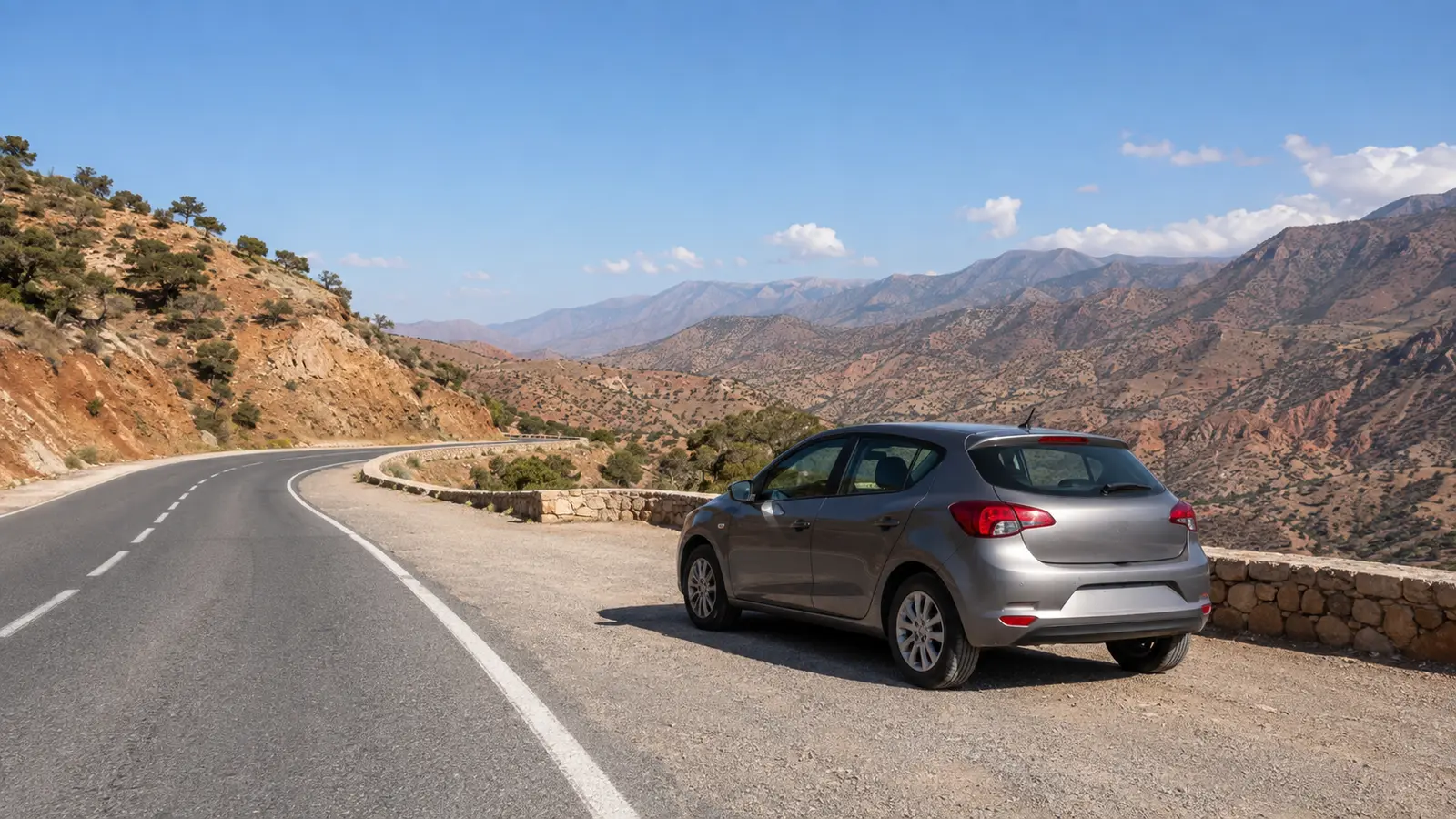
Rent only when a car improves the route
Rail is easier for the principal north–Atlantic corridor and several imperial-city combinations. An established coach reaches many towns beyond the tracks. A car becomes worthwhile for the Dades and Todra valleys, remote beaches, rural Atlantic routes, parts of the Middle Atlas or a sequence of villages where scheduled transport would require repeated returns to a hub.
Split the itinerary when possible: explore a medina by rail or transfer, collect the car while leaving the city, return it before the next dense urban stay. Compare rental, fuel, toll, parking and one-way fees against coach and transfer costs. Include the driver's fatigue; freedom is lost if every scenic day ends with a stressful night arrival.
- Use rail and coaches for well-served city corridors.
- Use a car for rural sequences and flexible landscape stops.
- Collect and return outside the most difficult city-driving days.
- Treat medinas as walking destinations, not parking targets.
Check current details: ONCF official rail booking · CTM official coach booking
Verify license, age, deposit and insurance before payment
Ask the rental company which license and international permit combination it requires for the driver's issuing country, then verify the legal requirement through an appropriate official or consular source. Rental minimum ages, years of driving experience and card-deposit rules can be stricter than the national minimum. The name on the payment card may need to match the lead driver.
Read the collision, theft, glass, tire, underbody and roadside-assistance terms. Learn the deductible and what conduct voids coverage. If buying third-party excess insurance, understand whether the rental desk still blocks the full deposit and whether the traveler must pay first and claim later. Obtain cross-border permission before taking any rental outside Morocco; never assume it is allowed.
- Accepted driving license and any international permit
- Minimum age and experience
- Deposit card and available credit
- Deductible and excluded parts
- Roadside assistance and accident procedure
- Written cross-border authorization when relevant
Check current details: Current Morocco road-travel advice
Document the rental before leaving the lot
Walk around the car slowly in daylight and record continuous video of every side, roofline, wheels, glass and interior. Make sure chips, dents, stains and missing trim appear on the contract. Photograph the fuel and mileage displays, and test lights, indicators, horn, wipers, air-conditioning, locks and phone charging.
Inspect tire condition, including the spare or repair kit, and locate the jack, warning equipment and required documents. Ask how roadside assistance works outside office hours. If a warning light remains on, a tire is damaged or the contract omits visible damage, do not accept a verbal promise; have it corrected or request another vehicle.
- Continuous exterior and interior video
- Contract marks for every visible defect
- Fuel, mileage, tires and glass
- Lights, wipers, climate control and locks
- Spare or repair kit and emergency equipment
- Written after-hours assistance process
Follow posted limits, enforcement and checkpoint instructions
Morocco's motorways, national roads, regional roads and urban streets demand different attention. Follow the posted speed and lane signs rather than a blog's claimed universal limit. Expect pedestrians, scooters, bicycles, animals and slow vehicles, especially where a fast road passes through a settlement. Seat belts and sober driving are basic controls regardless of local traffic flow.
Slow early for police or gendarmerie checkpoints, keep documents accessible and follow hand signals. If cited, remain polite and request the official process and receipt; do not offer an unofficial payment. Carry the rental contract, license, identification and insurance documents as instructed by the provider and authorities.
- Obey the sign on the road in front of you.
- Reduce speed before villages and pedestrian activity.
- Keep required driver and vehicle documents accessible.
- Request official documentation for any payment or citation.
Check current details: Morocco road-travel safety advice
Plan motorways, toll payment, fuel and service stops
Autoroutes du Maroc manages the motorway network and publishes official network and traveler information. Check the intended route and current toll system before travel. Follow lane signs at plazas and keep a practical local payment backup rather than assuming every card or electronic tag works in every lane.
Refuel before leaving a major corridor for a mountain, desert or rural road. Confirm the vehicle's fuel type at pickup and photograph it if necessary; misfueling can cause serious damage. Use established service stations, watch the pump and keep receipts. A half-full-tank threshold is a simple rule for remote legs without pretending fuel availability is uniform.
- Check the official motorway network and notices.
- Keep dirhams or another accepted backup for tolls.
- Confirm petrol or diesel before the first fill.
- Refuel early before remote routes.
- Retain toll and fuel receipts.
Check current details: Autoroutes du Maroc
Choose parking before entering the city
Map a reputable lot or accommodation garage outside the medina and ask for current access instructions. A route that ends at the riad's front door may lead into a lane where cars cannot proceed. Keep nothing visible in the cabin and remove passports, electronics and medication even in guarded parking.
Informal attendants may indicate spaces and expect a small payment, but their presence is not insurance or a guarantee. Clarify the amount and whether overnight parking is permitted. For overnight storage, prioritize a controlled facility recommended by the accommodation or rental provider and keep the parking ticket secure.
- Preselect a legal lot outside pedestrian areas.
- Remove all visible and valuable items.
- Clarify price and overnight permission.
- Retain the ticket and photograph the parking location.
Drive mountain and desert roads in daylight with an exit plan
Mountain roads can combine sharp bends, rockfall, poor visibility, snow, flood damage and vehicles crossing the center line. Desert approaches add heat, dust, long service gaps and occasional flooding in low channels. Avoid night driving on unfamiliar secondary roads, when pedestrians, animals, unlit vehicles and road damage are harder to see.
Check national weather warnings, ask the next accommodation or local authority about the exact road and turn back at flooding, closure or deteriorating visibility. Carry water, warm layers, charged phones, offline maps, a power bank and the roadside-assistance number. Tell someone the route and estimated arrival, and keep enough daylight to use the alternative.
- Daylight routing with a conservative arrival time
- Current weather and road-condition check
- Water, warm layer, phone power and offline navigation
- Fuel margin and roadside-assistance contact
- No attempt to cross flowing water or a closed road
Check current details: Morocco national weather service · Current Morocco road safety advice