
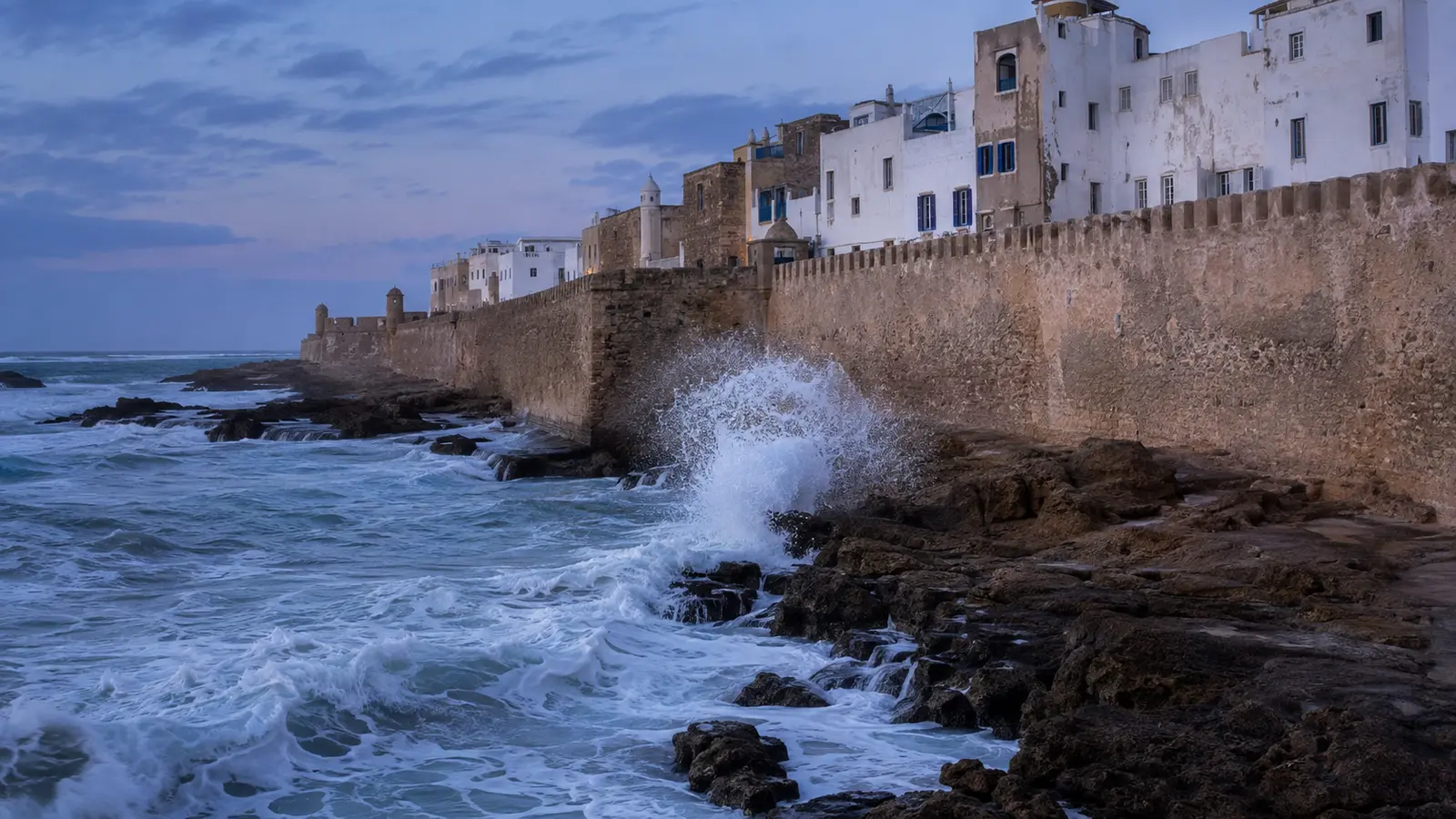
A fortified port with a wind-shaped rhythm
UNESCO identifies Essaouira as an eighteenth-century fortified seaport combining European military planning with a North African setting. The ramparts and harbor are not separate scenic props; they explain a city built around trade and Atlantic exposure. Wind is part of that geography. Plan the most exposed walk when conditions are comfortable and use the medina’s sheltered grid when gusts or sea spray increase.
On a windy afternoon, the working port may feel raw while a lane only a block inland remains calm. Plan with that contrast: use the ramparts and beach during the most comfortable weather window, then move into shops, galleries or cafés. Blue skies alone do not describe the coast; wind strength and swell are the more useful variables.
- Check wind before beach plans
- Use the medina as a weather shelter
- Read the ramparts in relation to the port
Check current details: UNESCO Medina of Essaouira record · Moroccan National Tourist Office — medinas and beaches
A medina route through gates and ramparts
Start from a gate you can recognize, follow one principal axis through markets and workshops, then branch toward the ramparts and harbor edge. The street plan is more regular than Fes, but it still rewards an offline pin for the accommodation. The mellah deserves context and respect, not abandoned-building photography. Stay behind coastal barriers and follow closures when swell reaches the walls.
Essaouira’s straighter streets reduce some navigation stress, but accommodation doors can still be hard to identify. Ask for the nearest gate and a storefront landmark. The mellah contains religious and residential history that deserves interpretation; avoid captions that portray worn buildings as abandoned mystery when people continue to live and work nearby.
- Save the entry gate
- Group the rampart and port side
- Treat the mellah as heritage and neighborhood
- Observe sea-wall closures
Fishing port and seafood decisions
The harbor is an active workplace with boats, equipment, vehicles and fish handling. Keep clear of operations and ask before photographing workers. For a meal, establish the fish, unit of sale, preparation and total before it is cooked. Visible turnover, clean handling and thorough cooking matter more than a stall’s popularity on social media. If the process is unclear, choose a restaurant with a written menu.
At the port, keep camera straps and loose clothing away from equipment and give loaded carts the right of way. When buying fish for cooking, ask where preparation takes place and whether salad, bread or drinks are included. A clear total before cooking prevents the meal from becoming a negotiation after the fish can no longer be returned.
- Ask price by fish, weight or portion
- Confirm cooking charges
- Stay outside work zones
- Choose clarity over pressure
Beach use by season and conditions
Essaouira’s broad beach supports walking and watersports, but wind, swell, currents and water temperature change the experience. Swim only where current local conditions and supervision support it. Choose a qualified operator for surf or kite activities, disclose your real ability and inspect equipment. A sunset walk is the reliable fallback when the water is unsuitable, but even then protect against blowing sand and cooling temperatures.
Swimming and surfing are separate decisions. A beach can be pleasant for walking yet unsuitable for an inexperienced swimmer, while a lesson may move to another break chosen for that day. Ask where the operator intends to go, how transport works and how instruction changes if wind or swell exceeds the planned range.
- Follow lifeguard and flag guidance
- Match instruction to actual skill
- Carry a wind layer
- Use walking as the poor-swim-condition alternative
Gnawa heritage beyond a calendar listing
Gnawa music carries spiritual, historical and community meaning that cannot be reduced to one annual stage program. If a festival or concert matters to the trip, verify the current organizer, dates, tickets and venue. Outside events, choose performances presented with clear context and respectful audience expectations. Ask before recording, and do not publish an artist name unless the program or performer confirms it.
A festival itinerary should come from the official organizer, not a hotel’s old event page. Note whether a performance is ticketed, public or part of a spiritual context before recording. Gnawa musicians are contemporary artists and tradition bearers, not anonymous ambience; use the performer or ensemble name supplied by the program when discussing the event.
- Verify festivals through the organizer
- Respect no-recording requests
- Credit performers accurately
- Avoid presenting a staged set as a ritual
Getting there from Marrakech, Agadir or Casablanca
Essaouira does not sit on Morocco’s passenger rail network, so most visitors arrive by coach, car or transfer. Check CTM or the chosen operator for live times, terminal and luggage rules. Marrakech and Agadir are common road links; Casablanca is a longer travel day. Avoid stacking a late coach arrival with a hard-to-find medina check-in and keep the host’s gate directions offline.
Coach luggage is normally handled at the terminal or vehicle, so retain any tag and keep medicines, documents and electronics with you. A transfer arriving at the medina still may stop at a gate. Share that gate with the host and arrange the final walk, especially after dark or in rain when signs are harder to read.
- Verify terminal and luggage policy
- Avoid the last possible arrival
- Save the accommodation gate
- Add road-delay margin
Check current details: UNESCO Medina of Essaouira record · Moroccan National Tourist Office — medinas and beaches
Two-day and four-day versions
In two days, use one for the medina, ramparts and harbor and one for beach conditions, food and a deeper craft or music stop. Four days suit travelers who want repeated weather windows, writing or remote work, or a genuinely slower coast rhythm. Do not fill every extra day with a distant excursion; Essaouira’s strength is the ability to return to the same streets at different tides and light.
Four days also create room for repetition: buy bread from the same bakery, return to a craft shop after comparing work and learn how the port changes with weather. That familiarity is the point of a slow stay. A distant day trip should earn its travel time rather than filling a blank square on the calendar.
- Two days for the complete core
- Four days for weather flexibility and slow travel
- Keep at least one unscheduled half-day