
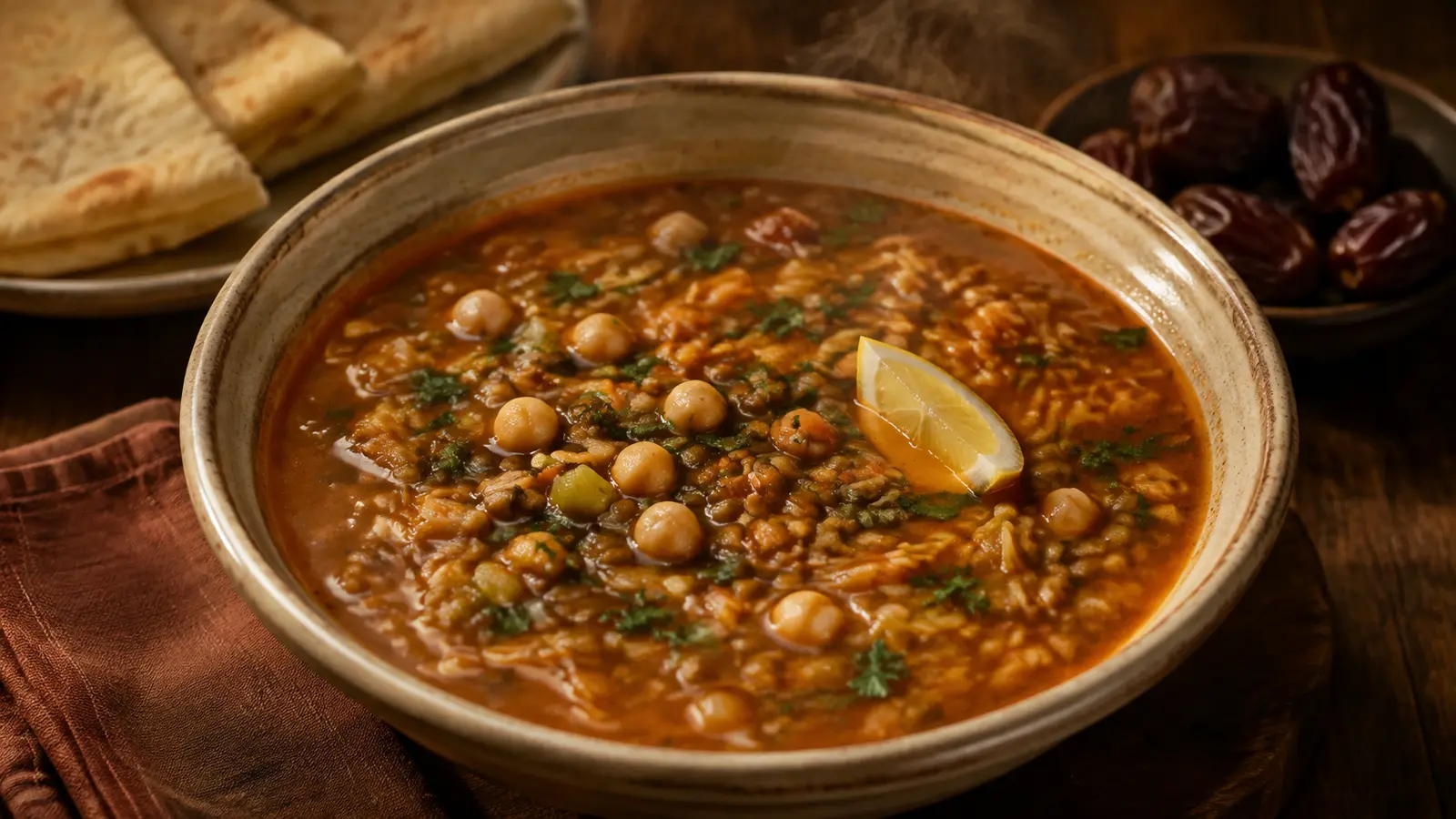
Harira's everyday and Ramadan roles, with household variation acknowledged.
During Ramadan, harira often arrives with dates, chebakia and water or milk at iftar. The pairing joins savory, acidic soup with sweet foods after the fast. That context is important, but no single consistency, noodle choice or meat ratio represents every Moroccan family.
Outside Ramadan, a bowl can be a light supper with khobz. Some versions are almost pourable, while others hold a spoon upright. This recipe aims between those extremes: broth that coats chickpeas and lentils but still flows easily.
- Context cue: serving harira at iftar does not make dates or chebakia ingredients of the soup; keep accompaniments listed separately for clear Recipe schema.
Check current details: Moroccan National Tourist Office — food and drink
Tomato, chickpea, lentil, celery and herb foundation.
Grated ripe tomato and a small amount of tomato paste form the red base. Onion, celery with leaves, cilantro and parsley should be finely chopped so they melt into the broth. Ginger, turmeric, pepper and a restrained cinnamon note provide warmth without obscuring the herbs.
Use cooked chickpeas for predictable timing. If starting from dried, soak and cook them separately until creamy before measuring; acidic tomato can slow softening. Brown or green lentils hold shape better than red lentils, which dissolve and alter the texture.
- Herb cue: celery leaves contribute as much identity as the stalk, so buy a bunch with fresh leaves rather than substituting only a large amount of celery seed.
Meat and vegetarian paths with separate flavor-building instructions.
For meat harira, brown small lamb cubes before softening onion. The fond gives depth, but the pieces should remain small enough for a spoon. For vegetarian harira, use olive oil and deepen the base by cooking tomato paste until it darkens slightly before adding grated tomato.
Water is sufficient when vegetables and herbs are well developed, though unsalted vegetable stock may be used. Avoid a strongly flavored commercial stock that dictates salt before the soup reduces. Add an extra 100 grams chickpeas to the vegetarian version for body.
- Vegetarian depth: darken tomato paste to brick red, add extra chickpeas and retain ample herbs instead of trying to imitate meat with excessive stock concentrate.
Pulse preparation and order of addition for even doneness.
Simmer meat until nearly tender before adding lentils. Cooked chickpeas enter with the lentils only long enough to absorb flavor; dry chickpeas would require a completely different schedule. Stir occasionally across the base because tomato solids can settle and scorch.
Add vermicelli or rice only after lentils are tender. Vermicelli needs about six minutes and continues softening in leftovers, while rice needs longer and absorbs more liquid. Pick one; using both creates a starchy soup that overwhelms the pulses.
- Pulse cue: lentils are ready when creamy inside but still circular; split skins are acceptable, while a uniform mash means they entered too early.
Tadouira thickener: slurry method, lump prevention and final body.
Tadouira is a smooth slurry of flour and cool water. Whisk it until no dry pockets remain, then strain. Bring the soup to a lively simmer and pour the slurry in a thin stream while stirring continuously so starch disperses before it sets.
Simmer at least ten minutes after thickening to remove raw flour taste. Stop when the soup lightly coats a spoon; it thickens further as it cools. If it becomes heavy, loosen with hot water and recheck salt rather than adding more tomato.
- Slurry cue: tadouira should pour like thin cream and show no flour beads in the strainer; thick paste is much harder to disperse evenly.
Acid, spice and salt correction at the end.
Salt and acidity sharpen as liquid reduces, so final correction belongs at the end. Add lemon juice one teaspoon at a time. If tomato tastes harsh, another five minutes of simmering usually helps more than sugar; a pinch of sugar is a last correction, not a standard ingredient.
Freshly chopped cilantro added just before serving restores aroma lost during the long simmer. Cinnamon should remain a background warmth. If it is the first thing you smell, balance with more tomato, herbs and broth rather than another competing spice.
- Acid cue: taste a cooled spoonful before adding the second tablespoon of lemon because very hot soup can mask acidity and encourage over-correction.
Serving with dates or chebakia, cooling and freezer guidance.
Serve hot with lemon wedges, dates or chebakia according to the occasion, and offer khobz for a fuller meal. Let guests decide whether to combine sweet and savory items; the soup itself does not need honey or dried fruit.
Cool a large pot quickly by dividing it among shallow containers and refrigerate within two hours. Use within three to four days or freeze without vermicelli for up to two months for best texture. Reheat to a boil, stirring because the flour thickener settles.
- Freezer planning: omit vermicelli from the portion intended for freezing and add freshly cooked pasta while reheating to avoid a swollen, broken texture.
Check current details: Morocco food safety authority — ONSSA