
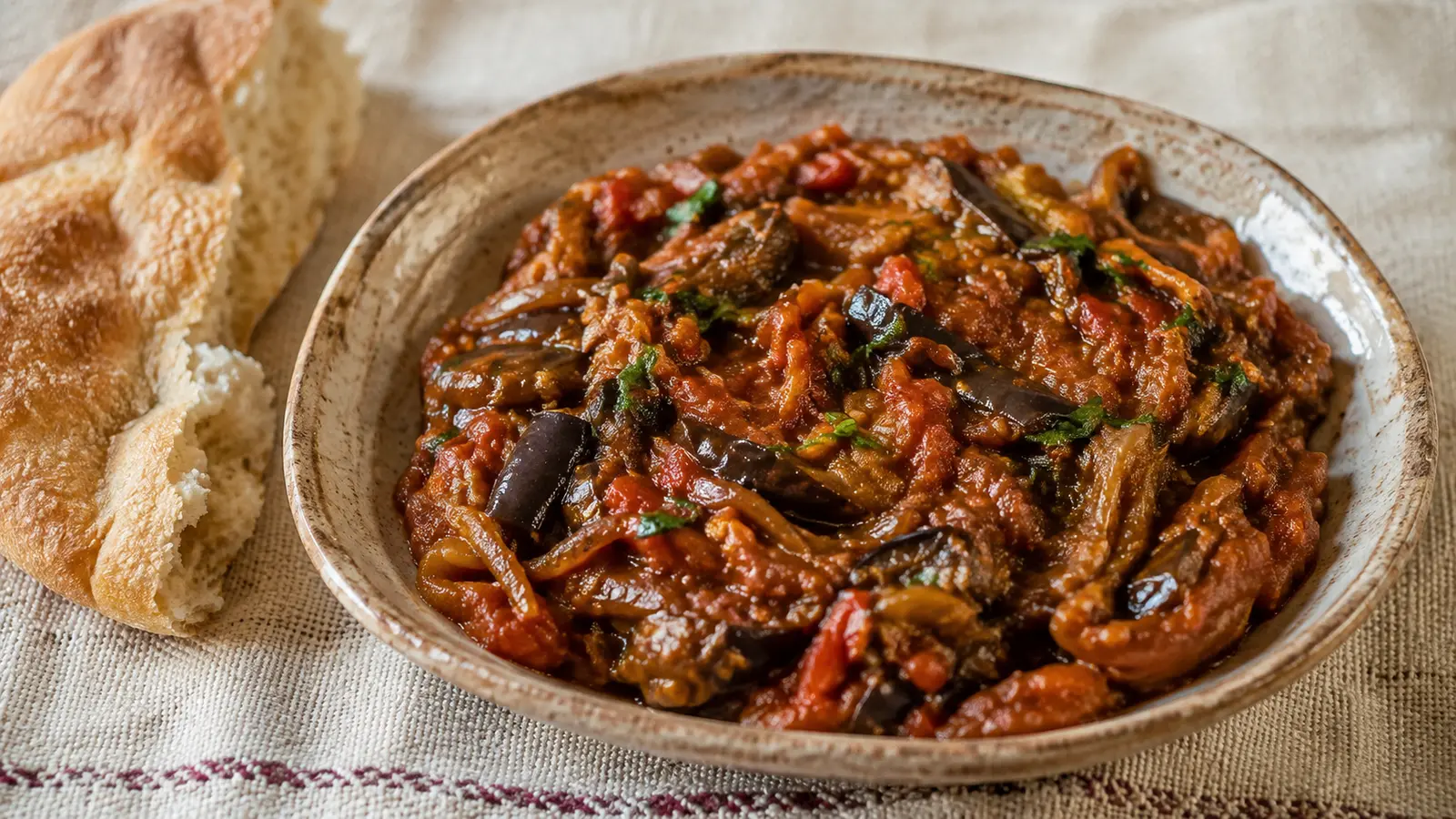
Zaalouk's place on the Moroccan salad table and why texture varies by household.
A Moroccan salad course often includes several cooked and raw preparations rather than one bowl of leafy greens. Zaalouk contributes soft eggplant, tomato acidity and cumin. Some households mash it heavily; others leave visible cubes. Both can be coherent if the vegetables are fully cooked and the liquid is concentrated.
The name covers variations in pepper, chile, lemon and cooking method. This recipe uses roasted eggplant for less oil and a light smoky edge, then mashes only enough to bind it with tomato.
- Table-planning cue: pair one soft cooked salad such as zaalouk with one crisp raw salad and one briny element instead of serving three dishes with the same texture.
- Batch yield: this formula fills one medium shared salad plate; for a party, make two separate pans so tomato reduces rather than steaming in an overcrowded vessel.
Check current details: Moroccan National Tourist Office — food and drink
Roasting, steaming or pan-cooking eggplant: flavor and moisture trade-offs.
Roasting whole eggplants concentrates flavor and keeps the tomato pan simple. Steaming creates a pale, very tender flesh without smoke, while pan-cooking diced eggplant gives the richest oil absorption and requires the most attention. Choose one method deliberately rather than mixing timings.
For roasting, prick the skin and cook until the eggplant collapses and a knife meets no resistance. Drain the scooped flesh for ten minutes; this step prevents watery zaalouk without squeezing away all its moisture.
- Roasting cue: eggplant is ready when the skin wrinkles, the whole fruit collapses under tongs and a knife slides through the stem end without resistance.
- Drainage limit: let gravity remove loose water, but do not press the flesh dry in a towel because the soft juices carry much of the roasted flavor.
Tomato reduction, garlic, cumin and paprika sequencing.
Grated tomato breaks down quickly, while peeled diced tomato leaves more pieces. Cook it with olive oil, garlic, cumin, paprika, salt and pepper until the raw aroma disappears and a spoon leaves a brief trail across the pan.
Add garlic with the tomato rather than browning it alone, which can turn bitter. Cumin should smell warm but not dusty. If using chile, begin with a small amount and keep the core dish balanced for the rest of the table.
- Tomato cue: grated tomato has reduced enough when bright raw foam disappears and small beads of olive oil begin separating at the edge.
- Garlic cue: if garlic begins browning separately, lower the heat and add tomato immediately; dark garlic introduces bitterness that cumin and lemon will not conceal.
Combining and mashing to a spoonable—not puréed—finish.
Fold drained eggplant into the reduced tomato and press with a wooden spoon or potato masher. Stop when the ingredients cling together but small eggplant strands remain. A blender erases the defining texture and can make the seeds seem more prominent.
Simmer uncovered while mashing so released water evaporates. The salad is ready when it gathers in soft mounds and no liquid ring forms around the edge. It will firm slightly while cooling.
- Tomato cue: grated tomato has reduced enough when bright raw foam disappears and small beads of olive oil begin separating at the edge.
Acid, salt, olive oil and optional chile correction.
Finish with lemon juice after heat is lowered, then taste for salt. A drizzle of good olive oil rounds harsh acidity, but adding large amounts to a watery pan only creates an oily emulsion. Reduce first, season second.
Fresh cilantro or parsley can brighten the final minute. Chile may be mixed in or offered separately. If tomato is particularly sweet, use more lemon; if very acidic, longer cooking is the first correction.
- Mashing cue: stop when a piece of bread can lift the salad cleanly while small strands of eggplant remain visible on the spoon.
Warm, room-temperature and cold service.
Warm zaalouk tastes lush beside a main dish; room temperature reveals cumin and lemon most clearly; chilled zaalouk is refreshing but firmer. Remove it from the refrigerator 20 minutes before serving if you want a softer texture.
Use a clean serving spoon and do not leave the dish out through a long hot afternoon. Small plates can be replenished from a refrigerated container rather than placing the entire batch on the table.
- Seasoning order: reduce water, add salt, add lemon, then finish with oil; changing that order makes it easy to mistake dilution for under-seasoning.
Storage and pairings with tagine, fish and bread.
Serve with khobz, taktouka and a crisp cucumber salad, or alongside preserved-lemon chicken and grilled fish. Chermoula shares garlic and cumin, so keep one of the two preparations restrained if they appear together.
Refrigerate within two hours in a covered shallow container and use within three to four days. Freezing is possible, but thawed eggplant releases water; re-simmer briefly and correct lemon before serving.
- Buffet practice: place a small bowl out and replenish from the refrigerator rather than leaving the entire batch at room temperature for repeated service.
Check current details: Agricultural Development Agency — Moroccan terroir products