
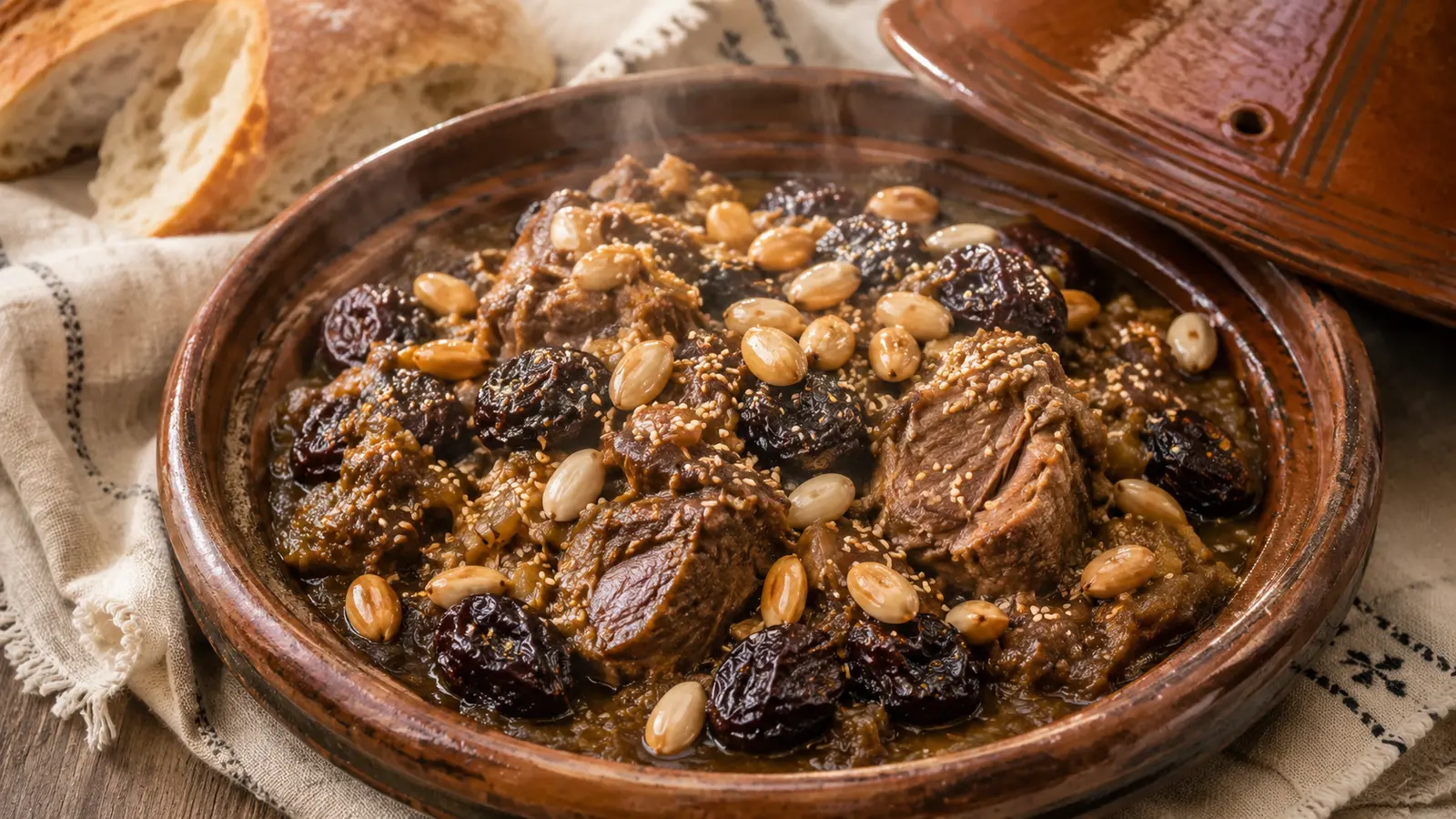
The sweet-savory structure and how festive lamb tagines differ from everyday versions.
Everyday lamb tagines may be built around vegetables, while this prune-and-almond version is associated with generous tables and special occasions. Its structure is still savory: onion, ginger, saffron or turmeric and lamb juices form the braising liquid before fruit or honey appears.
Sweetness should frame the lamb rather than mask it. A measured teaspoon or two of honey is enough when the prunes are naturally sweet. Cinnamon belongs partly in the savory braise and partly in the prune glaze, creating continuity without making the sauce taste like pastry filling.
- Balance check: taste one spoonful containing sauce but no prune; it should already be savory and complete before the glazed fruit is introduced.
Check current details: Moroccan National Tourist Office — food and drink
Choosing shoulder or shank, trimming fat and scaling bone-in portions.
Choose boneless shoulder in 5-centimeter pieces for even serving, or bone-in shank pieces for deeper gelatin and a longer cook. Trim only thick exterior caps of fat; removing every seam leaves the meat dry. For bone-in cuts, buy about 25 percent more total weight to account for bone.
Avoid lean leg cubes sold for quick cooking. They can become firm before the sauce develops. Pat the meat dry so the first contact with the pot browns rather than steams, and work in batches if the bottom becomes crowded.
- Buying check: shoulder pieces should show fine seams of fat and connective tissue; uniformly lean cubes are convenient but less forgiving during a two-hour braise.
Spice and aromatics: cinnamon, ginger, saffron/turmeric and onion ratios.
For 1.2 kilograms lamb, two onions provide enough body. Ginger gives heat, black pepper sharpness, turmeric color and saffron a hay-like perfume. A small cinnamon stick infuses more cleanly than a large dose of ground cinnamon, which can make the sauce dusty.
Ras el hanout is optional rather than mandatory. If used, add only half a teaspoon so it supports the defined ginger-cinnamon profile. Salt conservatively at the beginning because the sauce concentrates and toasted nuts bring their own savory impression.
- Spice check: if ground cinnamon dominates the raw seasoning aroma, reduce it before cooking because concentration will make it stronger, not softer.
Braising method and objective tenderness cues rather than time alone.
Brown the lamb, soften onion, then add spices and water just below the top of the meat. Cover and maintain a quiet simmer. Shoulder is ready when a fork enters with little resistance and a piece can be pressed apart, not merely when its exterior looks cooked.
Begin checking at 90 minutes, but expect up to two hours for mature or bone-in meat. Official guidance sets whole lamb cuts at a minimum 63°C/145°F followed by a three-minute rest; shoulder braises continue well beyond that point for tenderness. The liquid should never boil violently, and large pools of fat should be skimmed before reduction.
- Tenderness check: a thermometer confirms safety, but braise doneness requires the additional fork test because shoulder can be safe yet still tough.
Poaching and glazing prunes separately for controlled sweetness.
Simmer prunes separately in a ladle of braising liquid with honey and cinnamon. They should swell and become glossy while still holding their shape. Separate cooking also lets you stop before they collapse, even if the lamb needs another half hour.
Return the glazed prunes only for the final five minutes. If the dish is already sweet enough, omit the honey and reduce the prune liquid by itself. The goal is a savory sauce with distinct fruit, not lamb floating in syrup.
- Prune check: stop poaching when the fruit is plump and the skin glossy; split skins and loose pulp indicate the glaze has cooked too far.
Toasting almonds, finishing sauce consistency and plating.
Blanch and peel whole almonds if desired, then fry or toast until uniformly golden. Drain well and add at service so they stay crisp. Sesame is optional and should be lightly toasted; neither garnish should be buried in the sauce early.
Reduce the braising liquid until it coats the back of a spoon, then taste for salt, pepper and acidity. A teaspoon of lemon juice can sharpen a heavy finish. Arrange lamb first, spoon sauce around it, then distribute prunes and almonds so every serving includes each element.
- Garnish check: almonds should be golden at the center when cut, not merely browned on the outside, and must cool uncovered to remain crisp.
Make-ahead storage, reheating and serving with bread or couscous.
The braise improves after a night in the refrigerator because the fat can be lifted cleanly and the spices settle. Store the almonds separately. Reheat the lamb and sauce gently with a splash of water, warm the prunes at the end, and add freshly toasted almonds just before serving.
Serve with khobz for the sauce or place beside simply steamed couscous, not a heavily spiced vegetable couscous that competes with the fruit. Cool leftovers within two hours, refrigerate for no more than three to four days, and reheat until steaming throughout.
- Make-ahead check: chill the braise before sealing a deep container, and separate it into shallow portions so the center cools promptly.
Check current details: Morocco food safety authority — ONSSA