
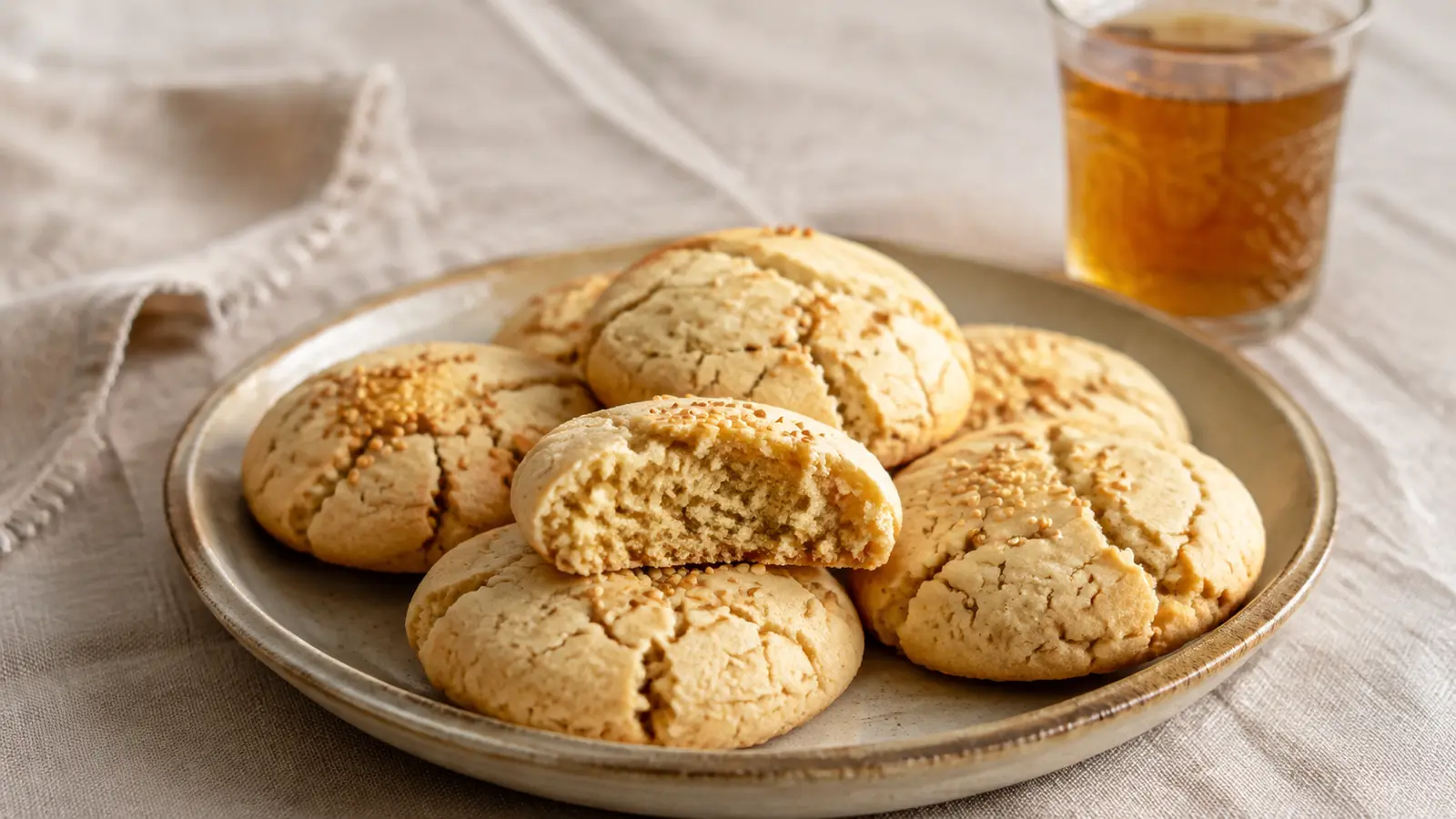
What defines ghriba bahla: a sandy crumb, toasted sesame and naturally cracked surface.
Ghriba can be made with almonds, walnuts, coconut, semolina or other regional and household combinations. The qualifier bahla is associated with a cracked, crumbly style, but recipes still vary in nut ratio, spice and whether the fat is butter, oil or a mixture.
A useful result is not simply “dry.” It should release a toasted sesame aroma, crumble under the tooth and then melt rather than coat the mouth with raw flour. Cracks belong across the top while the base remains intact enough to lift.
- Judge the cookie by aroma, sandy interior and clean release from the tray—not by maximizing the number of cracks.
Check current details: Moroccan National Tourist Office — food and drink
Ingredient roles: flour, almonds, sesame, butter, oil, sugar and leavening.
Flour gives the cookie a frame; finely ground almonds add richness; toasted sesame supplies nuttiness and a faint snap. Confectioners’ sugar disperses without making a gritty dough. Butter gives flavor, while neutral oil keeps the crumb tender after cooling.
A small amount of baking powder encourages expansion. Too much produces a cakey middle and soapy finish. Cinnamon is optional but useful in the background, and salt is essential because both almonds and sesame can taste flat beneath sugar.
- Use room-temperature butter that dents under a finger but is not glossy or partially melted.
Toasting and grinding nuts and seeds without releasing excess oil.
Toast sesame and almonds separately because their sizes and moisture differ. Spread each on a tray and stop at pale gold; carryover heat continues after removal. Cool fully before grinding or warm oils will turn almonds into paste and make sesame clump.
Pulse almonds to a fine meal with a spoonful of the measured sugar. Leave sesame mostly whole for visible flecks, grinding only one-third if a more cohesive dough is needed. Never pack warm ingredients into a closed container, where condensation damages texture.
- If ground almonds squeeze into an oily lump in the hand, chill them before mixing rather than adding corrective flour.
Mixing a cohesive dough without kneading away the crumbly texture.
Cream butter and sugar only until smooth, not until dramatically aerated. Mix in oil, then fold in cooled almonds, sesame and dry ingredients. Squeeze a small handful: it should form a clean clump without leaking fat.
If the dough remains dusty after thorough folding, add oil by the teaspoon. If shiny and slack, refrigerate for 20 minutes before deciding whether flour is necessary. Over-kneading creates a firmer, less crumbly cookie and can also squeeze oil from the nuts.
- A short rest lets flour hydrate and makes the first weighed portion a more reliable consistency check.
Portioning, shaping and encouraging controlled cracks in the oven.
Weigh 27-gram portions and roll lightly without compressing them into hard balls. Set on parchment with five centimeters between pieces, then flatten each to a thick puck. The small change in shape helps heat reach the center before the base browns.
Bake one calibration cookie first. If it spreads flat, chill the remaining dough. If it stays perfectly smooth and dry, press the tops more firmly or add one teaspoon oil to the batch. Natural cracks should appear during the latter half of baking.
- Keep portions equal so the visual crack cue and center doneness occur at the same time across the tray.
Tea service, make-ahead options, storage and allergen-aware sharing.
Serve with unsweetened or lightly sweetened mint tea so the cookie’s sesame and almond remain visible. For a mixed dessert plate, pair one ghriba with the thin shell of kaab el ghzal or a small slice of m’hanncha instead of presenting several large portions.
Store completely cool cookies airtight at room temperature for four days for best texture, with parchment between layers. Freeze for up to two months and thaw inside the closed container so condensation forms outside rather than on the cookies. Label clearly for sesame and almond allergies.
- When gifting, use a rigid shallow box; a soft bag turns the intentionally fragile crumb into loose pieces.
Check current details: Agricultural Development Agency — Moroccan terroir products · Morocco food safety authority — ONSSA